How To Build Weekend Outfits From Pieces You Already Own
A practical step-by-step guide to how to build weekend outfits from pieces you already own, including preparation, instructions, common issues, tips, and next steps.
How To Build Weekend Outfits From Pieces You Already Own
Building weekend outfits from pieces you already own is a practical skill that saves time, reduces decision fatigue, and helps you rediscover clothes you may have overlooked. By following a calm, step-by-step method, you can create comfortable, put-together looks without buying anything new. This guide walks you through preparation, outfit assembly, quick fixes, and advanced styling ideas, all focused on using your existing wardrobe. You will learn how to assess your clothes, plan around your weekend activities, and check your finished look so you feel confident and at ease.
Fast Answer
- Start with your weekend plans: list the activities, then pick one comfortable base layer or bottom that suits the most active part of your day.
- Choose two or three colors that already work together in your wardrobe, and build every outfit from that simple palette.
Before You Start
- Set aside thirty quiet minutes to look through your closet without judgment, pulling out any pieces you have not worn recently but still like.
- Check the weather forecast for the weekend and note the high and low temperatures, plus any chance of rain or wind, so your choices match real conditions.
- Wash or refresh any items that smell stale or have light wrinkles, because clean clothes are easier to style and feel better to wear.
- Create a small area—a chair, a hook, or a basket—where you can lay out complete outfits the night before, removing morning guesswork.
Step-by-Step Instructions
Identify your weekend activities
Begin by writing down what you will actually do this weekend. For example, you might run errands, meet a friend for coffee, take a walk, or relax at home. Group similar activities together so you need fewer outfits. Next to each activity, note the level of movement and the setting. A walk requires comfortable shoes and breathable fabric, while a coffee date may allow a slightly nicer top. This step matters because an outfit that works for a vigorous activity rarely works for a seated, social one. Once you have your list, choose the two or three activities that take up the most time, and plan your main outfits around those. The remaining time can use simpler, relaxed combinations. This focused approach prevents overpacking or overthinking and keeps your choices realistic.
Select a simple color palette
Open your wardrobe and pull out three or four colors that appear often and look good together. Common easy palettes include navy with white and grey, or olive with cream and denim blue. Lay the pieces side by side in good light and see which combinations feel calm rather than chaotic. Limit yourself to two main colors plus one neutral or accent. This restriction makes mixing and matching faster because every top will work with every bottom. Check that the colors also suit your skin tone by holding them near your face in daylight. If a color makes you look tired or washed out, set it aside for this weekend. A simple palette is not boring; it is a tool that lets you dress well without stress. Once chosen, keep those pieces in a dedicated section of your closet for easy access.
Build the base layer first
Start each outfit with a comfortable base layer that sits closest to your skin. This might be a plain t-shirt, a soft long-sleeve top, or a light sweater, depending on the weather. Choose one that fits well across the shoulders and does not ride up when you move. The base layer sets the tone for the whole outfit, so pick a neutral or a color from your palette. Next, add a bottom piece such as jeans, chinos, or casual trousers. Check the waistband by sitting down and standing up; it should stay in place without digging in. This check matters because a base layer that shifts or pinches will make you adjust your clothes all day. Once the base and bottom feel secure, you have a reliable foundation. You can then add a middle layer like a cardigan or overshirt for warmth and visual interest.
Add one layer for warmth or style
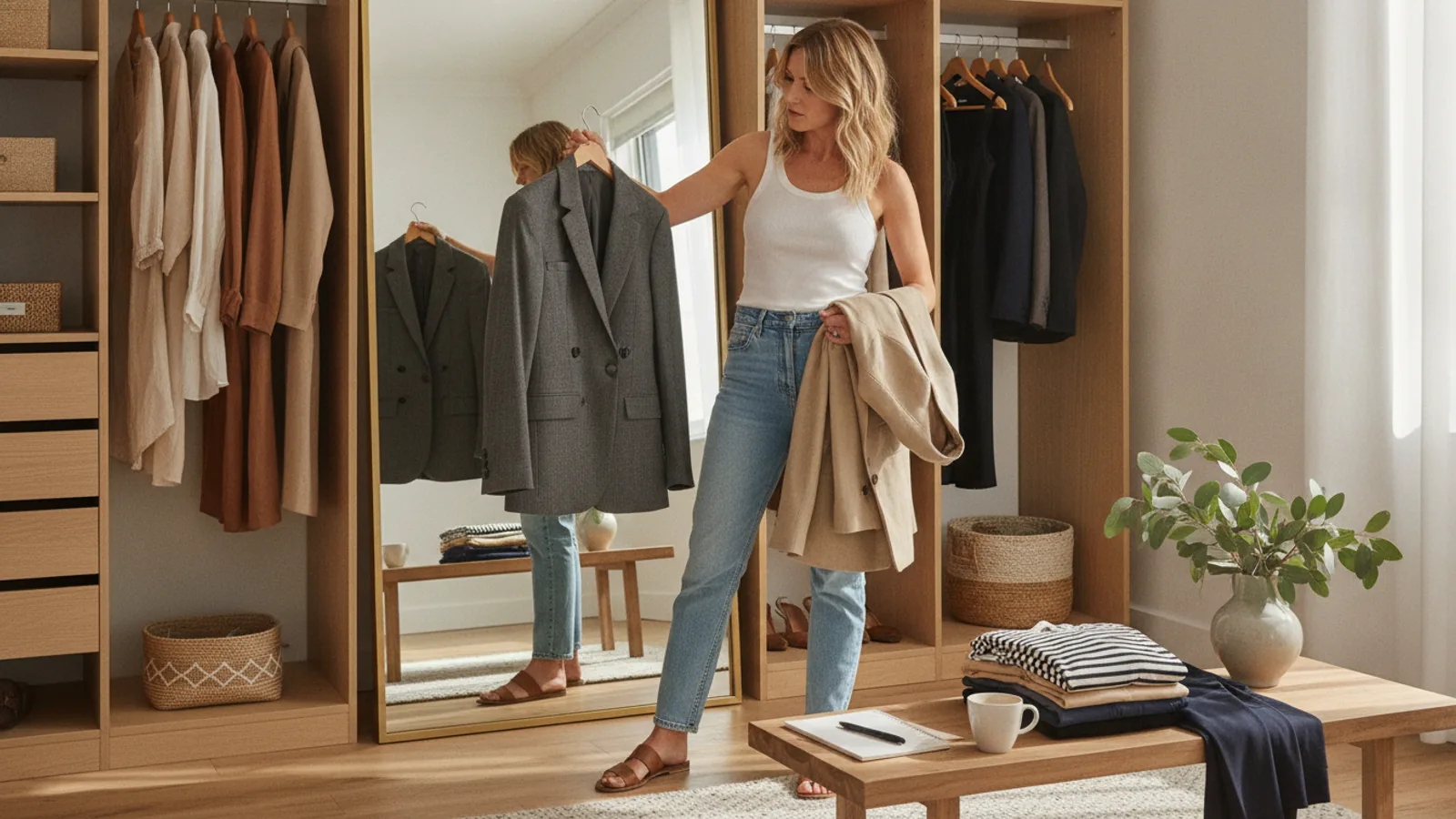
A middle layer is your best tool for adapting to changing temperatures and adding personality. Choose an open cardigan, a denim jacket, a quilted vest, or a simple pullover. The layer should be easy to remove and carry if the day warms up. Hold the layer against your base and bottom to see if the proportions look balanced. A long layer over wide bottoms can feel heavy, while a short layer over slim bottoms can look top-heavy. Adjust until the lengths feel pleasing. This check matters because layers change the shape of your outfit more than any other piece. Also test the layer’s sleeves: they should not bunch at the wrist or cover your hands. If they do, roll them once or choose a different piece. A good middle layer makes a simple base look intentional and ready for a range of weekend moments.
Choose comfortable shoes and accessories
Shoes can make or break a weekend outfit, so start with comfort. Select a pair you can walk in for at least an hour without pain. Clean them if needed, because scuffed shoes make even a good outfit look tired. Next, add one or two accessories that tie the look together. A belt that matches your shoes, a simple watch, a hat, or a scarf can all work. Limit accessories to two visible items so the outfit stays calm. Check that your bag, if you carry one, works with your activities. A crossbody bag keeps hands free for errands, while a tote holds more for a longer day. This check matters because the wrong bag or shoes creates friction that you feel all day. Once shoes and accessories are set, try the full outfit on and move around to confirm everything stays in place.
Do a final mirror check and adjust
Stand in front of a full-length mirror in good light and look at your complete outfit from several angles. Check the front, sides, and back. Look for wrinkles, tags, or twisted seams. Sit down, cross your legs, and reach forward to make sure nothing pulls or gaps. Walk a few steps and notice if anything shifts. This final check matters because small issues that seem fine while standing can become annoying when you move. If something feels off, change only one element—perhaps the layer or the shoes—rather than starting over. Also confirm that your outfit suits the weather and your planned activities. When everything looks and feels right, take a quick photo for future reference. Hang or fold the outfit so it is ready to wear. You have now built a weekend look from pieces you already own.
Quick Reference
| Situation | Action | Why it helps |
|---|---|---|
| You have a casual outdoor walk planned. | Choose a breathable base layer, add a light zip-up or vest, and wear supportive walking shoes with socks that do not slip down. | Breathable fabrics and secure shoes prevent overheating and blisters, so you can enjoy the walk instead of managing discomfort. |
| You are meeting friends for a relaxed coffee. | Pair clean dark jeans with a solid-colored top and a soft open layer, then add one simple accessory like a watch or a plain scarf. | This combination looks put-together without being formal, and the single accessory adds interest without making the outfit feel busy. |
| The weather may shift from cool to warm. | Wear a light base layer with a removable middle layer, and choose a bag or tote that can hold the layer when you take it off. | A removable layer lets you adapt to temperature changes, and having a place to store it keeps you comfortable and hands-free. |
Common Issues
- The outfit feels boring or plain.: Add texture instead of more color: try a ribbed knit, a denim layer, or a woven belt. Texture creates visual interest without breaking your simple palette, and it often makes an outfit look more intentional.
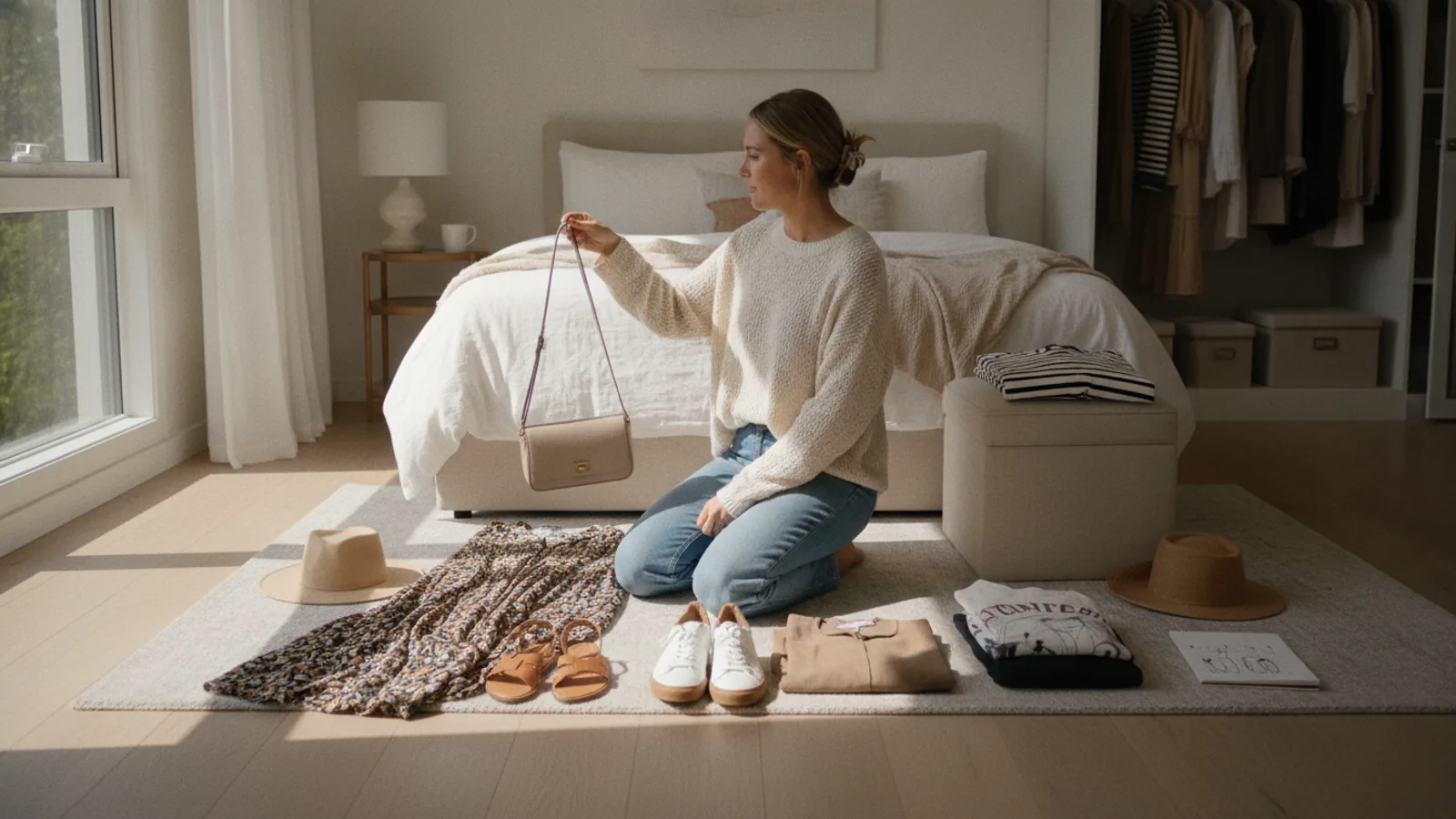
- You cannot find a matching bottom for your favorite top.: Lay the top on a flat surface and place three different bottoms next to it in daylight. Pick the one with the closest undertone, then check the fit by sitting and standing. Often a bottom you already own works better than you expect.
- Your outfit wrinkles or shifts when you move.: Choose fabrics with a bit of stretch or a relaxed weave, and check that your base layer is tucked or secured if needed. Before leaving, do a sitting and bending test. If something shifts, adjust the fit or swap that piece for one that stays put.
Advanced Tips
- Create a weekend capsule of eight to ten pieces that all work together, and store them in one section of your closet so you can dress in minutes.
- Use the rule of thirds: aim for one-third of your outfit in one color and two-thirds in another to create a balanced, flattering proportion.
- Keep a small notebook or note on your phone listing which combinations received compliments or felt best, so you can repeat successful outfits without rethinking.
Final Checklist
- Confirm the outfit suits your main weekend activity and the expected weather.
- Test comfort by sitting, standing, walking, and reaching in the full outfit.
- Check that shoes are clean, supportive, and suitable for the distance you will walk.
- Lay out the complete outfit the night before, including accessories, so morning choices are simple.
FAQ
How many pieces do I need for a weekend outfit?
Most weekend outfits work well with three to five pieces: a base layer, a bottom, an optional middle layer, shoes, and one or two accessories. The exact number depends on the weather and your plans. Focus on comfort and fit rather than hitting a specific count, and adjust by adding or removing one layer as needed.
What if I do not like any of my clothes?
Start by pulling out the pieces you wear most often and asking what makes them comfortable. Often the issue is fit or fabric rather than style. Try combining those reliable pieces in a new way, such as pairing a favorite top with a different bottom. If something still feels wrong, set it aside for now and work with what feels good.
Can I build weekend outfits without accessories?
Yes, you can. Accessories are optional and simply add polish or function. If you skip them, make sure your base layer and bottom fit well and your shoes are clean and comfortable. A well-fitting outfit in a simple palette looks complete on its own. Add accessories later only if you want to change the look or need a practical item like a belt.