How To Choose An Everyday Blazer That Earns Its Place
A practical step-by-step guide to how to choose an everyday blazer that earns its place, including preparation, instructions, common issues, tips, and next steps.
How To Choose An Everyday Blazer That Earns Its Place
An everyday blazer earns its place by fitting your actual life, not a fantasy version of it. This guide helps you choose one that works with the clothes you already wear, feels comfortable for hours, and survives real use. You will learn how to test fabric, fit, and construction so you buy once and wear often.
Fast Answer
- Choose a blazer that fits your shoulders first, then adjust the rest with a tailor.
- Pick a fabric and color that match at least three outfits you already own.
Before You Start
- Pull out the five outfits you wear most often and note their colors and formality levels.
- Measure your shoulder width and sleeve length on a blazer that already fits you well.
- Decide your budget ceiling and the three occasions you need this blazer to cover.
- Check the return policy and tailoring options before you shop so you can try without pressure.
Step-by-Step Instructions
Map your real wardrobe first
Before you look at any blazer, open your closet and make a simple list of the tops and bottoms you actually wear on a normal week. Write down the colors, the level of formality, and the fabrics. For example, if most days you wear dark jeans and a plain tee, your blazer must work with that combination first. If you often wear dresses or skirts, note their lengths and shapes. This step prevents you from buying a blazer that only matches one special outfit. A practical check is to create three complete outfits using only pieces you already own and one imaginary blazer. If you cannot build three, your target color or fabric is wrong. This matters because an everyday blazer is defined by repeat wear, not by how good it looks on a single occasion. When you shop, carry this list and test each candidate against it.
Test the shoulder fit before anything else
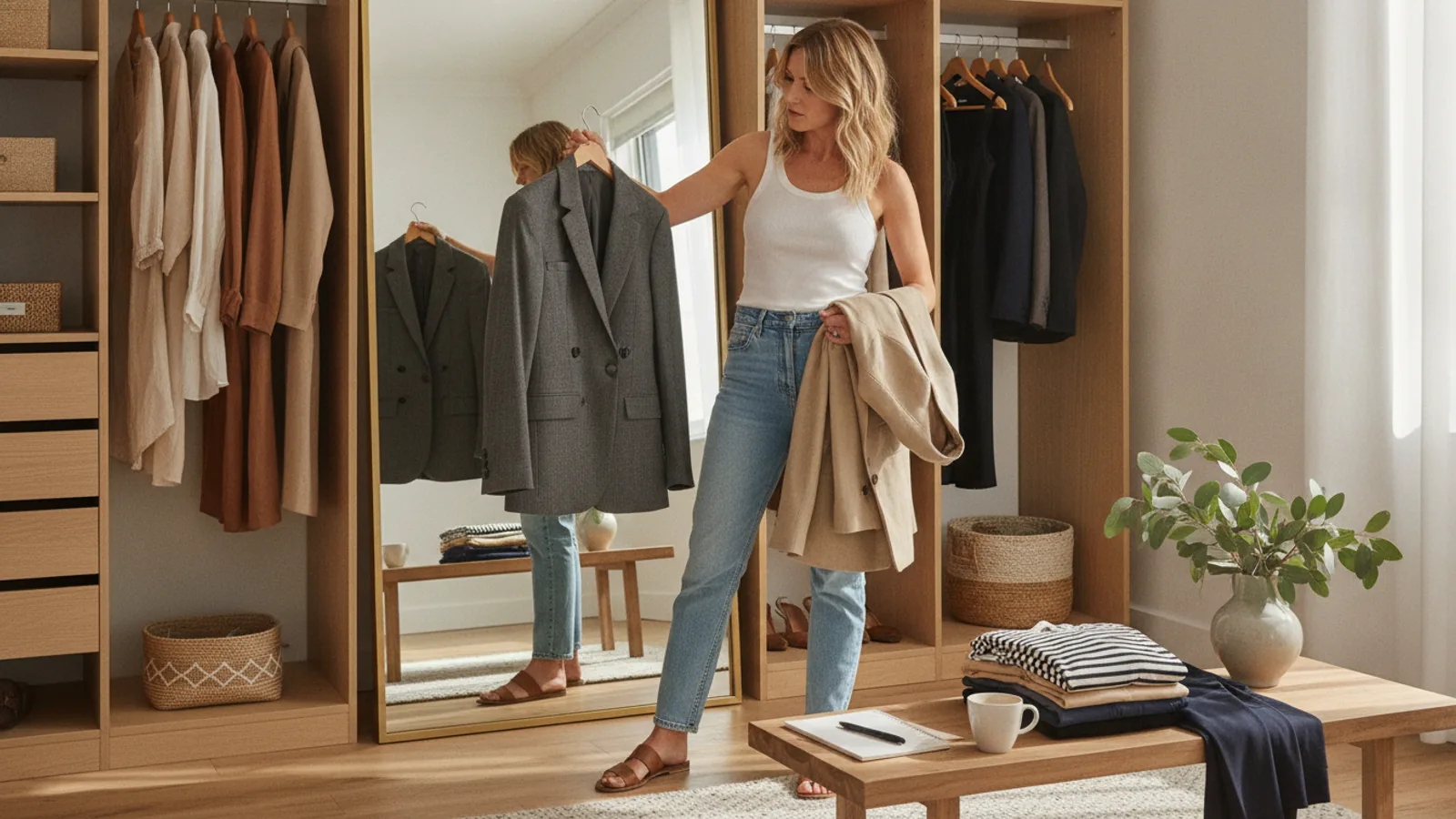
Put on the blazer and stand in front of a mirror. The shoulder seam should end at the outer edge of your shoulder bone, not hanging past it or sitting inside it. Raise your arms forward and to the sides. The jacket should move with you without pulling the collar away from your neck. If the shoulder pads feel like they are floating above your shoulders, the blazer is too large. If the fabric pinches when you cross your arms, it is too small. A practical check is to place one finger under the shoulder seam; it should feel snug but not tight. This matters because shoulders are the hardest part of a blazer to alter. A tailor can shorten sleeves and take in the waist, but rebuilding shoulders often costs more than the jacket itself. Get this one area right, and the rest becomes easy to adjust.
Check the button stance and closure
Button the blazer and look at where the top button sits. On a single-breasted jacket, it should land at or slightly above your natural waist, not near your ribcage or your hips. The fabric should lie flat across your chest and stomach without pulling open in an X shape. Slide two fingers under the buttoned front; if you cannot fit them, the jacket is too tight. If you can fit a whole hand, it is too loose. A practical check is to sit down while buttoned. The jacket should not dig into your stomach or ride up uncomfortably. This matters because the button stance controls how the blazer drapes and whether you can wear it open or closed. A blazer that only looks good unbuttoned limits your styling options. When you find a stance that works, note the measurement from the collar seam to the button so you can compare other jackets.
Evaluate fabric for daily wear
Rub the fabric between your fingers and hold it up to the light. For everyday use, you want a fabric with a bit of natural stretch and breathability, such as wool blends with a small amount of synthetic fiber for durability. Pure linen wrinkles quickly, while heavy polyester can trap heat. A practical check is to squeeze a section of the sleeve and release it. Good fabric springs back with few sharp creases. Then check the lining: it should be smooth and allow your arm to slide in without catching. This matters because you will wear this blazer for hours at a time, often indoors and outdoors. A fabric that feels stiff or scratchy will stay in your closet. Look for a weight that works in at least two seasons, and avoid anything so thin that it shows every shirt seam underneath. Carry a small water bottle and test a drop on an inside hem to see how the fabric handles moisture.
Confirm sleeve and length proportions
With the blazer on, let your arms hang naturally. The sleeve should end at the wrist bone, showing a small strip of shirt cuff if you wear long sleeves. If the sleeve covers your hand, it is too long; if it stops above the wrist, it is too short. For length, the jacket hem should fall around the middle of your seat, covering your waistband and the top of your pockets. A practical check is to button the jacket and look at the back hem in a mirror. It should not flare out or curl up. This matters because sleeve and length changes are the most common alterations, and they change the entire proportion of the jacket. A blazer that is too short can look like a cropped cardigan, while one that is too long can swallow your frame. Before you buy, ask a tailor what the maximum safe adjustment is for that specific jacket.
Do a movement and pocket test
Wear the blazer for at least five minutes in the store. Reach overhead, bend forward, sit on a chair, and twist your torso. The jacket should follow without strangling your arms or bunching at the back. Now check the pockets. Put your phone in one pocket and your hands in the others. The fabric should not sag or pull the jacket out of shape. A practical check is to walk briskly for a minute and see if the blazer stays in place or shifts around your shoulders. This matters because an everyday blazer must handle real movement, not just a static pose. If the pockets are sewn shut, ask if they are meant to be opened. flimsy pocket bags will wear out quickly. Finally, check the buttons and seams. Tug gently on a button and look for loose threads. A well-made blazer should feel solid in these small details.
Quick Reference
| Situation | Action | Why it helps |
|---|---|---|
| The blazer fits your shoulders but the sleeves are too long. | Buy it only if a tailor confirms the sleeves can be shortened from the cuff without removing functional buttons, then get them adjusted to your wrist bone. | Sleeve length is a common and affordable alteration, so a shoulder-perfect jacket with long sleeves is usually a good purchase, not a rejection. |
| The blazer feels tight across your back when you reach forward. | Size up or try a different cut with more room in the upper back, and test the reach again before considering any purchase. | Back tightness cannot be fixed by letting out seams in most jackets, and it will make you avoid wearing the blazer for daily tasks. |
| The color looks great under store lights but you are unsure about daylight. | Step outside with the blazer or hold it near a window, then compare it against a photo of your most-worn outfits. | Artificial lighting changes how colors appear, and a blazer that clashes with your existing clothes will not earn repeat wear. |
Common Issues
- The blazer looks boxy and shapeless.: Look for a cut with a defined waist or ask a tailor to take in the side seams slightly. A small alteration at the waist can change the entire silhouette without affecting the shoulders.
- The fabric wrinkles badly after a short drive.: Choose a wool blend with natural recovery or a textured weave that hides creases. Hang the blazer immediately after wearing and use steam rather than a hot iron to smooth it.
- The buttons feel loose or the buttonholes are rough.: Reinforce the buttons with a few extra stitches using matching thread, and test each buttonhole by unbuttoning and buttoning several times. Rough edges often soften with use but can be carefully trimmed by a tailor.
Advanced Tips
- Check the canvassing by pinching the front of the blazer between two fingers; a floating canvas adds structure that molds to your body over time.
- Ask a tailor to adjust the collar so it sits flat against your neck, since a gaping collar makes even an expensive blazer look borrowed.
- Keep a small lint roller and a fabric shaver handy to maintain the surface, especially on dark colors that show every speck.
Final Checklist
- Shoulder seams end at the edge of your shoulder bone and do not pinch when you move.
- You can button the blazer comfortably and sit down without the fabric pulling or riding up.
- The fabric feels appropriate for at least two seasons of your normal routine.
- You can name three outfits from your own closet that this blazer improves.
FAQ
How do I know if a blazer is too tight?
Button the blazer and slide two fingers under the front closure. If you cannot fit them, it is too tight. Also reach forward and cross your arms. The fabric should not pull into an X shape across your chest or dig into your back. Tightness that restricts movement will keep the blazer in your closet.
Should I buy a blazer that needs alterations?
Yes, if the shoulders and back fit well. Sleeve length, waist suppression, and hem length are common alterations that a tailor can handle. Avoid jackets that need shoulder or collar rebuilding, because those changes are difficult and can distort the jacket. Always ask a tailor to confirm what is possible before you buy.
What fabric is best for an everyday blazer?
A wool blend with a small amount of synthetic fiber offers durability, breathability, and wrinkle recovery. Textured weaves hide creases better than smooth finishes. Avoid very thin fabrics that show shirt seams and heavy synthetics that trap heat. Test the fabric by squeezing it; good fabric springs back with few sharp creases.