How To Build Outfits Around Comfortable Shoes
A practical step-by-step guide to how to build outfits around comfortable shoes, including preparation, instructions, common issues, tips, and next steps.
How To Build Outfits Around Comfortable Shoes
Comfortable shoes do not have to flatten your style; they can become the anchor that makes getting dressed faster and more pleasant. This guide shows how to build outfits around supportive footwear by choosing colors and shapes deliberately, balancing volume, and planning around real days. You will learn a repeatable method that starts with the shoe, then adds clothing in a sensible order, checks proportions and function, and finishes with small adjustments. The result is a wardrobe that looks intentional and keeps your feet happy from morning to evening.
Fast Answer
- Pick the shoes first, then choose pants and tops that match their color family and visual weight.
- Try the full outfit standing in front of a mirror, walk a few steps, and adjust one piece at a time.
Before You Start
- Choose one pair of comfortable shoes you actually wear often, and place them where you can see them while dressing.
- Notice the shoe's three main qualities: color, shape or volume, and level of casualness, because these guide every clothing choice.
- Set aside pants and tops in colors that repeat or softly contrast with the shoe, and remove pieces that fight it.
- Plan the day's activities, such as walking, sitting, or standing, so the outfit supports your feet and your schedule.
Step-by-Step Instructions
Start with the shoe and read its message
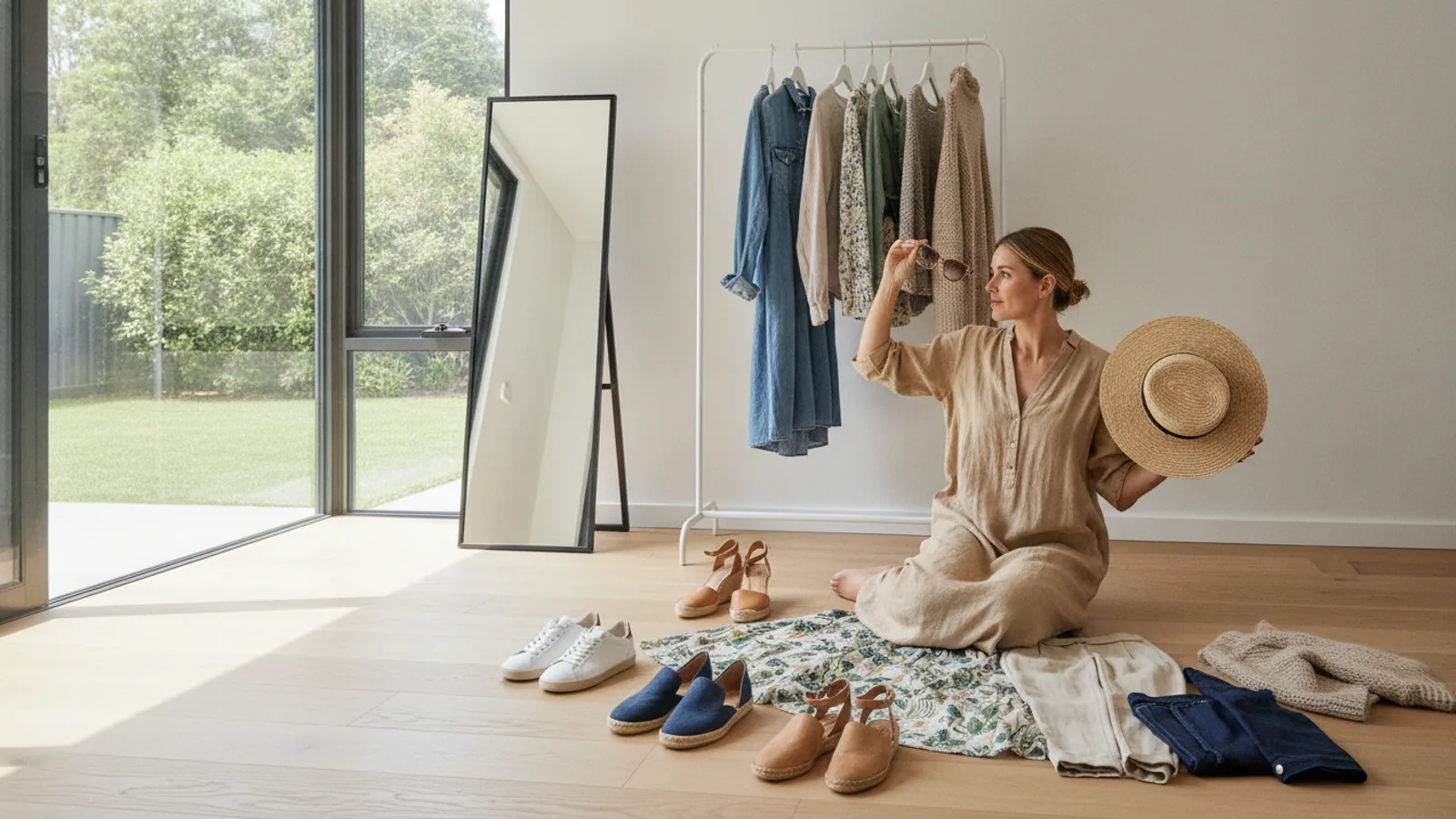
Place your comfortable shoes on a clean surface in good light. Look at them carefully and write down three things: the main color, the shape of the toe, and how dressy or casual they appear. A chunky sole and rounded toe usually read casual, while a slim profile and smooth surface read dressier. This matters because the clothing you choose should match that message rather than fight it. Next, pick a target level for the day, such as relaxed errands, a casual workplace, or a simple dinner. Say it out loud: relaxed, smart casual, or dressy. As a practical check, hold the shoes next to your two or three favorite pants and see which pair looks most natural. The check matters because it uses your own eyes instead of a rule, and it prevents you from forcing a formal outfit onto a very casual shoe.
Build the bottom half around the shoe
Choose pants, jeans, skirts, or shorts that relate to the shoe in color and volume. A simple method is to match the shoe color closely for a long, smooth line, or to choose a clearly different but calm color for gentle contrast. Avoid a hem that bunches heavily over the shoe, because extra fabric can hide the shoe's shape and make the outfit look sloppy. Try the pants on with the shoes and stand up straight. Check where the hem lands: just above the shoe, lightly touching it, or with a clean break. Walk ten steps and look again. This walking check matters because fabric moves differently when you move, and a hem that looks fine standing still can drag or catch when you walk. If the hem is too long, roll it once, pin it, or choose a different pair.
Choose a top that balances the whole shape
With the shoes and bottom half in place, add a top. Think about the total shape: comfortable shoes often add visual weight near the ground, so a top with a bit of structure or interest near the shoulders can balance the look. A simple jacket, a collared shirt, or a top with a defined neckline can do this. Keep the color plan easy: repeat the shoe color somewhere small, such as a belt, bag, or subtle pattern, or use a neutral top that lets the shoes stand out. Put on the full outfit and step back from the mirror. Check the silhouette from shoulders to feet. As a practical test, cover the shoes with your hand and look at the top half, then cover the top half and look at the shoes. This check matters because balance is easier to judge in two parts than all at once.
Check comfort and movement before leaving
Wear the complete outfit for at least ten minutes at home. Walk around, sit down, stand up, climb a few stairs if you have them, and reach for something high and low. Pay attention to three points: your toes, your heel, and the top of your foot. Check that nothing rubs, pinches, or slips. Also check that your pants do not catch under the shoe and that your top does not ride up when you move. If something bothers you, change one item and repeat the test. This order matters because changing one piece at a time shows you which item caused the problem. As a final movement check, walk quickly for one minute, because a faster pace reveals small issues that slow walking hides. Fix those issues now instead of during your day.
Adapt the formula for different settings
The same method works in many settings once you adjust the level of polish. For a relaxed day, pair the shoes with soft pants and a simple top in calm colors. For a casual workplace, choose cleaner lines, a structured layer, and a bottom that ends neatly at the shoe. For a simple evening, use darker colors, a smoother fabric, and one small shiny detail, such as a metal buckle on a bag. In each case, start again with the shoe and repeat the steps: bottom half, top, then movement check. As a practical check, lay the full outfit on the bed before you wear it, then ask whether every piece belongs to the same level. This check matters because mixing levels without intention is the most common reason a comfortable outfit looks accidental rather than planned.
Refine, repeat, and maintain the system
After you wear an outfit, take one minute to note what worked and what did not. Did the hem stay clean when you walked? Did the colors feel right in daylight? Did your feet stay comfortable all day? Write a short note in your phone or a small notebook. Over time, these notes become your personal guide and remove guesswork. Then repeat the best combinations and slowly replace the weak pieces. Also care for the shoes: keep them clean, check the soles and laces, and let them dry naturally if they get damp. As a practical check, review your notes at the end of each week and pick one small improvement for the next week. This check matters because small, steady changes build a wardrobe that truly works, while one big shopping trip often creates new problems.
Quick Reference
| Situation | Action | Why it helps |
|---|---|---|
| Your comfortable shoes look too casual for the rest of the outfit | Swap the bottom half for a cleaner, straighter pair of pants in a color close to the shoe, then add a structured layer such as a simple jacket or collared shirt. | Clean lines and a structured layer raise the outfit's level without changing the shoes, so you keep comfort and gain a more polished look. |
| The pants hem bunches over the shoes and hides their shape | Try the pants with the shoes and adjust the hem so it ends just above the shoe or touches it lightly with one clean break, using a roll, pin, or tailor. | A neat hem line shows the shoe clearly and keeps the lower half of the outfit from looking heavy or untidy when you walk. |
| Your feet hurt after a long day even in comfortable shoes | Check the fit, socks, and laces first, then reduce standing time or switch to a second comfortable pair for the rest of the day. | Most discomfort comes from small fit or sock problems, and fixing those is faster and safer than pushing through pain. |
Common Issues
- The outfit feels mismatched even though each piece is nice on its own: Lay everything on the bed and remove one piece that does not share the shoe's color family or casualness level. Then add a simple neutral item, such as a plain top or belt, that repeats the shoe color and ties the look together.
- The shoes feel fine at home but uncomfortable after hours of walking: Test the full outfit with a fast one-minute walk before leaving, and carry a spare pair of thin socks or a soft bandage. If rubbing starts, change socks, adjust laces, or switch to your second comfortable pair for the rest of the day.
- You own comfortable shoes but still reach for the same old outfit: Photograph two or three complete outfits built around the shoes and save them where you dress. In the morning, pick a photo and copy it instead of starting from nothing.
Advanced Tips
- Use value contrast rather than color contrast: light shoes with dark pants or dark shoes with light pants create a clear, intentional line that is easy to repeat.
- Choose one small detail to echo the shoe, such as stitching, a buckle shape, or a texture, so the outfit feels connected without matching too literally.
- Keep a single neutral base layer in a color that flatters you, then change only the outer layer and bottom to shift the outfit between settings.
Final Checklist
- Put on the full outfit and walk quickly for one minute, then check your toes, heel, and the top of your foot for rubbing or slipping.
- Check the pants hem in a mirror and while walking, making sure it ends cleanly at the shoe instead of bunching or dragging.
- Confirm the outfit matches the day's activity level and that every piece belongs to the same casual or dressy level.
- Carry one small comfort item, such as thin socks or a soft bandage, and keep a second comfortable pair available for long days.
FAQ
Do comfortable shoes always look casual?
No. Comfort comes from fit, support, and materials, not from a single style. A shoe with a smooth surface, a slim profile, and a calm color can look neat and polished while still feeling good. The key is to match the rest of the outfit to the shoe's level, using cleaner lines and a structured layer when you want a dressier result.
How many outfits do I need around one pair of shoes?
Start with two or three complete outfits that you have tested and like. That is enough to cover most weeks and to learn what works with your shoe. Once those feel easy, add one new combination at a time, and photograph each one so busy mornings become simple and quick.
What should I do if my feet still hurt in comfortable shoes?
First check the basics: the fit, the socks, and the laces. Make sure there is room at the toes and no pressure at the heel or the top of the foot. If discomfort continues during normal use, stop pushing through it and speak with a qualified health professional, because ongoing foot pain can have causes that clothing changes cannot fix.