How To Compare Denim Fit When Shopping Online
A practical step-by-step guide to how to compare denim fit when shopping online, including preparation, instructions, common issues, tips, and next steps.
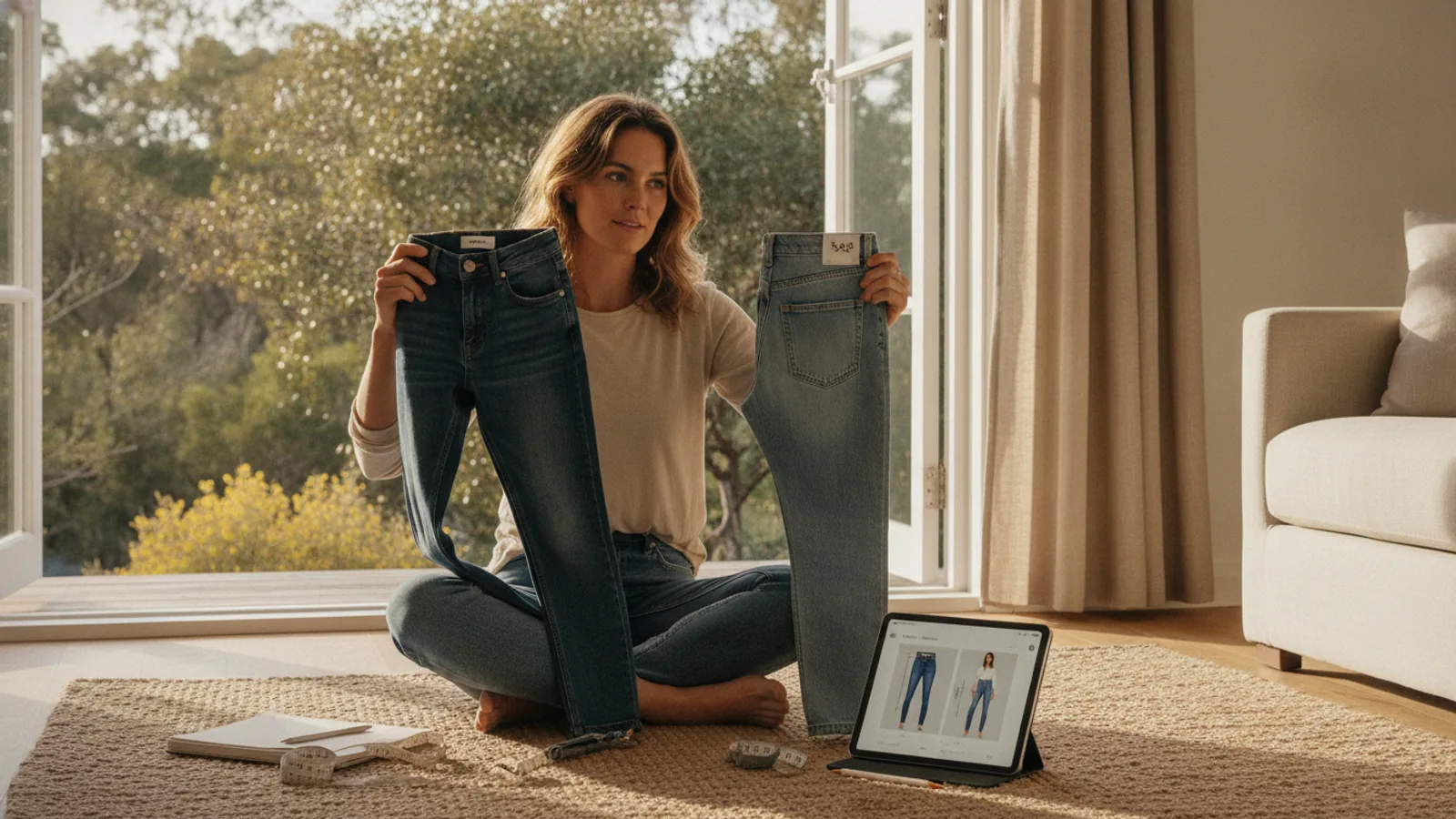
How To Compare Denim Fit When Shopping Online
Comparing denim fit when shopping online is a skill you can learn. This guide walks you through measuring your best-fitting jeans, reading size charts correctly, interpreting fabric stretch, checking model measurements, and using return policies wisely. You will also learn how to ask sellers precise questions, keep a fit log, and avoid common traps like vanity sizing and misleading photos. By the end, you will be able to judge whether a pair of jeans will fit before you buy, reducing returns and frustration.
Fast Answer
- Measure a pair of jeans you already love, then compare those numbers to the online size chart.
- Check the fabric content and stretch percentage, because a rigid denim and a stretch denim in the same size fit differently.
Before You Start
- Gather a flexible tape measure, a pair of jeans that fit you well, and a notebook or note-taking app to record measurements.
- Lay your best-fitting jeans flat on a clean surface and smooth out any wrinkles so the measurements are accurate.
- Find the online retailer's size chart and note whether it uses body measurements or garment measurements; these are different.
- Check the product page for the model's height, weight, and the size they are wearing, as this gives a real-world reference.
Step-by-Step Instructions
Measure Your Best-Fitting Jeans
Start by taking your favorite pair of jeans that fit you well. Lay them flat on a table. Use a flexible tape measure to record five key measurements: waist (across the top edge, side to side), hip (across the widest part below the waistband), inseam (from the crotch seam to the hem), thigh (across the leg at the crotch), and rise (from the crotch seam to the top of the waistband). Write these numbers down in inches or centimeters, but be consistent. This step matters because online size charts often list garment measurements, not body measurements. Comparing your best-fitting jeans directly to the chart tells you whether the new pair will match the fit you already love, rather than relying on a generic size label that varies by brand.
Read the Size Chart Carefully
Open the size chart for the specific jeans you want to buy. Check whether it lists body measurements (your waist, hip, etc.) or garment measurements (the actual dimensions of the jeans). If it lists body measurements, compare them to your own body measurements taken with a tape measure around your waist and hips. If it lists garment measurements, compare them to the measurements of your best-fitting jeans from step one. Also look for a note about how the jeans are supposed to fit: slim, straight, relaxed, or loose. This step is crucial because a size 30 in one brand may match a size 32 in another. Understanding the chart's basis prevents you from ordering a size that is too tight or too loose based on a misleading number.
Evaluate Fabric Stretch and Weight
Look at the fabric content on the product page. Denim can be rigid (100% cotton) or stretch (cotton with a small percentage of elastane, spandex, or polyester). Stretch denim will expand when worn, so it may feel tight at first but loosen up. Rigid denim will not stretch much, so it should feel snug but not uncomfortable from the start. Also check the fabric weight, often given in ounces per square yard. Heavier denim (above 12 ounces) is stiffer and holds its shape, while lighter denim (under 10 ounces) is softer and may bag out. This step matters because two jeans with the same measurements can fit very differently depending on stretch. A rigid pair in your size might be perfect, while a stretch pair in the same size could become too loose after a few hours.
Study Model and Customer Photos
Scroll through the product photos and look for the model's measurements. Many retailers list the model's height, weight, and the size they are wearing. Compare that to your own body to judge how the jeans might fit you. For example, if the model is much taller and wearing a size that would be too long for you, you may need a shorter inseam. Also read customer reviews and look at customer-submitted photos. Pay attention to reviewers who share their height, weight, and usual size. This step is important because photos on a model can be styled and lit to look flattering, but customer photos show real-world fit. They reveal how the jeans look on different body types, helping you avoid surprises.
Ask the Seller Specific Questions
If the size chart is unclear or you have a specific concern, contact the seller or check their FAQ page. Ask precise questions: What are the exact waist and inseam measurements for the size you are considering? Is the denim pre-shrunk or will it shrink after washing? What is the return policy if the fit is wrong? Also ask if they can provide additional measurements, such as thigh or knee width. This step matters because a quick question can save you the hassle of a return. Sellers often have detailed information not listed on the page, and they can confirm whether a particular size will work for your body. Getting answers in writing also gives you a reference if you need to return the item.
Use the Return Policy as a Safety Net
Before you click buy, read the return policy carefully. Check the time limit for returns, the condition required (tags attached, unworn), and whether you can return for a refund or only for store credit. Also note if return shipping is free or if you must pay. If the policy is strict, consider ordering two sizes and returning the one that does not fit, but only if you can afford the temporary charge and the return is convenient. This step is essential because even with careful comparison, online shopping involves some risk. A clear return plan reduces that risk and lets you try the jeans at home without pressure. If returns are difficult, you may want to shop elsewhere.
Quick Reference
| Situation | Action | Why it helps |
|---|---|---|
| You are between two sizes on the size chart. | Choose the larger size if the denim is rigid or if you are unsure, because you can always have it tailored or wear a belt, but a too-small pair cannot be stretched comfortably. | Rigid denim does not stretch much, so a tight fit may be uncomfortable and restrictive, while a slightly larger pair can be adjusted. |
| The size chart lists only body measurements, not garment measurements. | Measure your own body at the waist and hips with a tape measure, then compare to the chart, and also measure your best-fitting jeans to see how they differ from your body. | Body measurements tell you what the jeans are designed to fit, but your best-fitting jeans show the actual garment dimensions you prefer, which may include ease. |
| Customer reviews say the jeans run small or large. | Look for reviewers with similar body measurements to yours and see what size they ordered and how it fit, then adjust your size choice accordingly. | Reviews from people with similar proportions give a more accurate picture than general comments, because fit depends on individual body shape. |
Common Issues
- The jeans fit in the waist but are too tight in the thighs.: Check the thigh measurement in the size chart, or ask the seller for it. If the thigh is too small, consider a different cut, such as a straight or relaxed fit, which provides more room through the leg. You can also look for denim with a higher stretch percentage, as it will give more in the thighs.
- The jeans are the right size but the rise is uncomfortable.: Measure the rise of your best-fitting jeans and compare it to the product description. Rise is the distance from the crotch seam to the top of the waistband. If you prefer a higher or lower rise, look for that specific measurement. Many brands list rise, but if not, ask the seller.
- The denim shrinks after the first wash.: Check if the denim is pre-shrunk. If not, expect some shrinkage, especially in 100% cotton. Wash in cold water and hang dry to minimize shrinking. You can also buy a slightly larger size if you know the denim will shrink, but only if the fabric content indicates it is not pre-shrunk.
Advanced Tips
- Keep a fit log for each brand you buy, noting the size, style, measurements, and how it fit after washing. Over time, this log becomes a personalized size guide.
- Use the 'compare' feature on retailer websites when available to see side-by-side measurements for different sizes or styles, which helps you spot differences quickly.
- If you have a sewing tape, measure the waistband of jeans you already own after they have been worn for a few hours, because denim can relax with body heat and movement.
Final Checklist
- I have measured my best-fitting jeans and recorded waist, hip, inseam, thigh, and rise.
- I have read the specific size chart for the item and know if it uses body or garment measurements.
- I have checked the fabric content and stretch percentage, and considered how it will affect fit over time.
- I have reviewed the return policy and understand the time limit, condition requirements, and who pays for return shipping.
FAQ
How do I know if jeans will fit if I cannot try them on?
Start by measuring a pair of jeans you already own and love. Compare those measurements to the size chart for the new jeans. Pay attention to waist, hip, inseam, thigh, and rise. Also check the fabric stretch, because stretch denim behaves differently from rigid denim. Read customer reviews and look for reviewers with similar body measurements. If you are still unsure, contact the seller with specific questions. Finally, make sure you understand the return policy so you can send them back if they do not fit.
Why do jeans from different brands fit differently in the same size?
There is no universal sizing standard for denim. Each brand uses its own patterns and may follow different sizing conventions. Some brands use vanity sizing, where a size label is smaller than the actual measurement. Others may cut for different body types. Additionally, the fabric content and stretch can change how the jeans fit. That is why relying on the number on the label is not enough. Always compare the actual measurements in the size chart to your own measurements or to a pair of jeans you already own that fits well.
Should I buy jeans that are tight if they have stretch?
Stretch denim will relax with wear, so it may feel tight when you first put it on. However, it should not be painful or restrict movement. If the jeans are uncomfortably tight in the waist or thighs, they may not relax enough to be comfortable. A good rule is to buy stretch denim that feels snug but not painful, and rigid denim that feels comfortable from the start. If you are between sizes, consider sizing up for rigid denim and possibly sizing down for stretch denim, but always check the specific brand's guidance and reviews.