How To Build A Capsule Wardrobe For An Australian Climate
A practical step-by-step guide to how to build a capsule wardrobe for an Australian climate, including preparation, instructions, common issues, tips, and next steps.
How To Build A Capsule Wardrobe For An Australian Climate
Building a capsule wardrobe for Australia's varied climate means choosing a small set of flexible clothes that handle hot summers, cool winters, and sudden weather changes. This guide shows you how to plan, sort, and refine a wardrobe that works across city, coast, and bush without owning too much.
Fast Answer
- Start with a two-week weather diary for your area, then choose layers you can add or remove as the day heats or cools.
- Aim for about 30 to 40 items including shoes, but keep only pieces that fit, suit your daily life, and mix easily.
Before You Start
- Track local temperatures, rain, and wind for two weeks so your choices match your real conditions rather than a general idea of Australian weather.
- List your regular activities, such as work, school runs, outdoor sport, or social events, and note what you actually wore for each one.
- Empty your wardrobe onto a bed and sort every item into keep, repair, donate, or store piles based on fit, condition, and how often you wore it.
- Choose a small set of base colours and one or two accent colours so most tops, bottoms, and layers can be worn together.
Step-by-Step Instructions
Map Your Local Climate And Routine
Begin by writing down the weather you actually experience. For two weeks, note the morning low, afternoon high, rain, humidity, and wind where you live. Add a column for what you wore and whether you felt too hot, too cold, or comfortable. This turns a vague idea of Australian weather into a clear pattern. For example, you may find that most days need a light layer at dawn and a breathable shirt by midday. Next, list your weekly activities and the settings: air-conditioned office, outdoor market, beach walk, or evening sport. This matters because a capsule wardrobe is not just about temperature; it is about the places you go and the clothes that suit them. Check your notes for repeated combinations that already worked, then build your plan around those instead of guessing.
Choose A Layering System That Breathes
Australian weather often shifts from cool to warm within hours, so build around three layers: a base layer, a mid layer, and a outer layer. Choose base layers in breathable natural or technical fabrics that move moisture away from your skin. Mid layers can be a light knit, fleece, or quilted vest that packs small. The outer layer should block wind and light rain without feeling heavy. Test each layer by wearing it indoors, then stepping outside for ten minutes. You should be able to add or remove one layer and still feel comfortable. This check matters because a capsule fails when one layer is too hot for mild days or too thin for cold mornings. Keep colours in the same family so the layers look intentional when worn together, and make sure each piece can be worn on its own as well as under another.
Select Versatile Tops And Bottoms
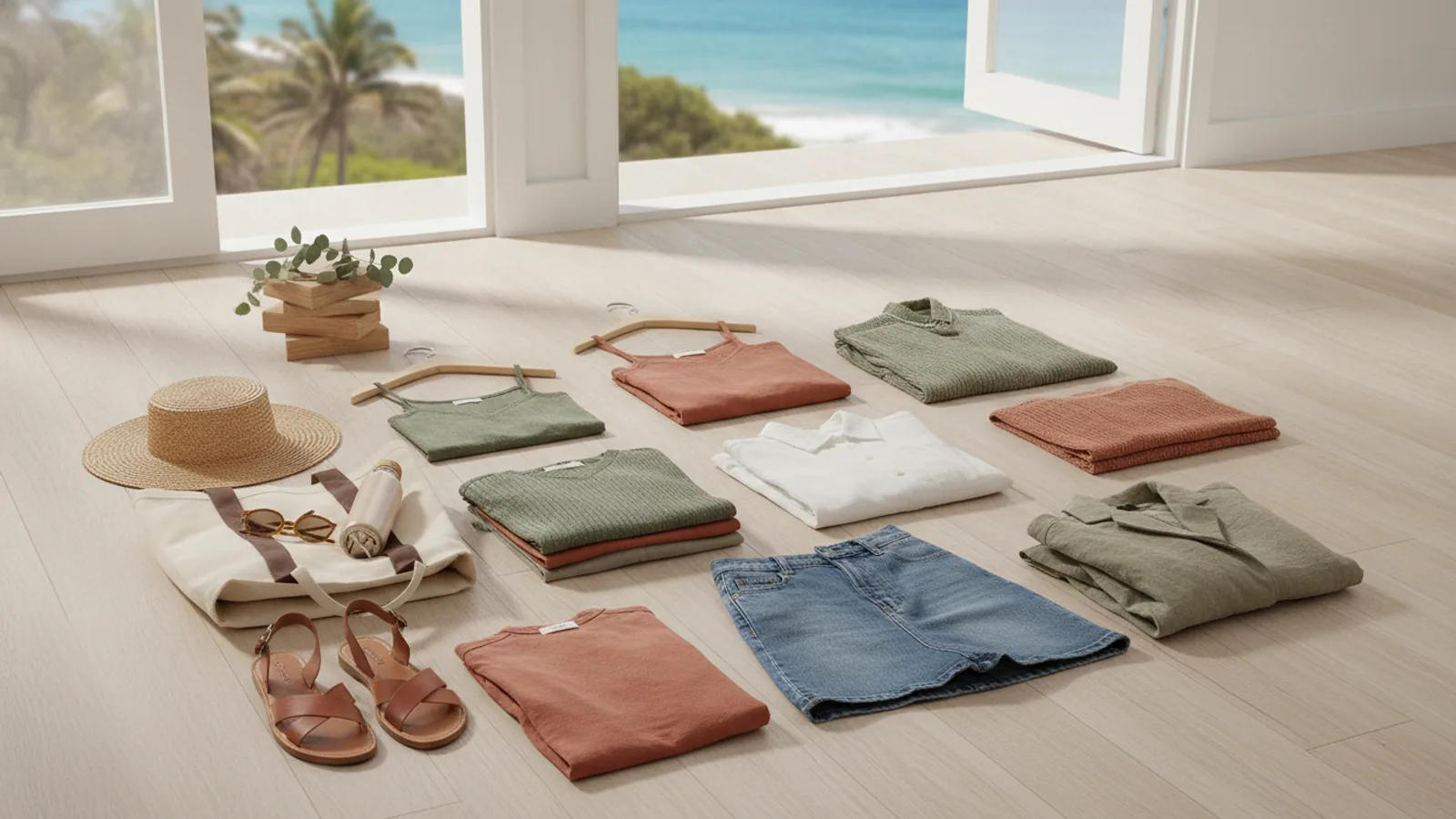
Aim for tops and bottoms that can be mixed without thinking. Choose around six to eight tops, including short-sleeve, long-sleeve, and one or two button-up styles. For bottoms, choose three to four pairs: perhaps relaxed trousers, shorts, and one smarter option. The goal is that any top matches any bottom in your chosen colour palette. Test this by laying every top next to every bottom and removing any piece that only works with one partner. That check matters because a capsule depends on combinations, not on single outfits. Consider fabrics that handle heat and repeated wear: linen blends, cotton, merino, and quick-dry synthetics. Avoid heavy fabrics that stay damp or wrinkle badly. If you work in a formal setting, keep one tailored outfit that follows the same colour rules so it still fits the capsule.
Pick Shoes And Accessories That Cover Ground
Shoes often break a capsule because people own many pairs that suit only one activity. Choose three to four pairs: comfortable everyday walking shoes, sandals or breathable shoes for warm days, one pair for wet or muddy conditions, and one smarter pair if your life requires it. Check each pair by walking around your home and up and down stairs for five minutes. You are looking for heel grip, toe room, and no rubbing. That check matters because a shoe that hurts on day one will be avoided later. For accessories, keep a hat with a brim, a compact umbrella, a light scarf, and a bag that holds your daily items. Choose colours that repeat in your clothing so accessories tie the capsule together rather than adding clutter. Store shoes clean and dry, and rotate them so one pair does not wear out too fast.
Edit, Store, And Fill Gaps
Now return to your sorted piles. Keep only items that fit well, suit your local weather, and match your colour plan. For each rejected item, decide whether to repair, donate, or store for another season. Be honest about clothes you keep for a future body or a rare event; those items take space and attention from the capsule. After editing, list the gaps you truly need, such as a warmer mid layer or a rain shell. Buy only those items, and check the fabric, fit, and care label before committing. This check matters because a rushed purchase often becomes another unused item. Store off-season pieces in a clean, dry box with a note listing what is inside. Keep your capsule visible and easy to reach, with similar items grouped together, so getting dressed stays quick and calm.
Test, Maintain, And Adjust Monthly
A capsule is not finished on the day you build it. For one month, wear only your capsule items and keep a simple note of what you wore, what felt wrong, and what you wished you had. At the end of the month, review the notes. If you repeatedly avoided an item, ask whether the fit, fabric, or colour is the problem. If you repeatedly needed something missing, add one carefully chosen piece. Wash and dry items according to their care labels, and repair small issues such as loose buttons or hems before they grow. This check matters because small maintenance keeps clothes useful for longer and protects your investment of time and money. Adjust for the coming season by swapping one or two layers, not by rebuilding the whole wardrobe. A good capsule changes slowly and stays useful across many Australian weather patterns.
Quick Reference
| Situation | Action | Why it helps |
|---|---|---|
| You are getting dressed for a day that starts cool and ends hot. | Wear a breathable base layer, add a light mid layer, and carry a compact outer layer that you can remove and fold into your bag. | This lets you stay comfortable as the temperature rises without carrying a heavy coat or changing clothes during the day. |
| You are unsure whether a new item belongs in your capsule. | Lay it beside three existing items and check whether it matches at least two of them in colour and formality, then walk and sit in it for five minutes. | A capsule item must combine easily and feel comfortable in real movement, not just look good on a hanger. |
| Your wardrobe feels crowded but you still have nothing to wear. | Remove everything you have not worn in the past month and place it in a storage box, then plan outfits using only the remaining items for one week. | This shows you which pieces you truly use and reveals whether the problem is too many clothes or the wrong clothes. |
Common Issues
- You own many clothes but keep wearing the same few items.: Remove the unused items from your main wardrobe for two weeks and note whether you miss them. If you do not, donate or store them and keep only the pieces that earn their place through regular wear.
- Your layers are too heavy for mild days or too thin for cold mornings.: Choose mid layers that pack small and outer layers that block wind and light rain. Test each combination outdoors for ten minutes at the time of day you usually feel coldest or hottest, then adjust the layer rather than adding more clothes.
- Your capsule colours do not mix well together.: Sort your clothes by colour and remove any item that clashes with more than two others. Rebuild around one neutral base, one darker neutral, and one accent colour, then check that most tops work with most bottoms before buying anything new.
Advanced Tips
- Keep a small repair kit with needles, thread, buttons, and a stain cloth so you can fix minor damage before it makes an item unwearable.
- Choose fabrics that dry quickly and resist wrinkles, which reduces the need for ironing and makes travel or long days easier.
- Rotate your shoes and air them after each wear to control moisture and odour, which extends their useful life in humid conditions.
Final Checklist
- Every item fits well, suits your local weather, and can be worn with at least two other pieces in the capsule.
- You have base, mid, and outer layers that can be added or removed as the day changes.
- Shoes cover your main activities and have been tested for comfort on stairs and uneven ground.
- Off-season and unused items are stored or removed, and you have a short list of genuine gaps to fill.
FAQ
How many items should a capsule wardrobe have?
Most people find a workable range is about 30 to 40 items including shoes, but the right number depends on your climate, activities, and how often you do laundry. Start with fewer items and add only what you genuinely miss after a month of wear.
Can a capsule wardrobe work in both hot and cool Australian seasons?
Yes, if you build around layers and choose fabrics that breathe in heat and insulate in cool weather. Keep a small set of off-season pieces in storage and swap them in as the season changes rather than owning two full wardrobes at once.
What should I do with clothes that no longer fit my capsule?
Sort them into repair, donate, or store piles. Repair items you still value, donate items in good condition that no longer suit you, and store only pieces you will realistically wear in another season, with a label so you can find them later.