How To Find Australian Labels With A Useful Size Range
A practical step-by-step guide to how to find Australian labels with a useful size range, including preparation, instructions, common issues, tips, and next steps.
How To Find Australian Labels With A Useful Size Range
Finding Australian clothing labels with a genuinely useful size range takes a calm, methodical approach rather than guesswork. This guide walks you through checking size charts, reading fit notes, comparing measurements, and testing options so you can build a wardrobe that fits well without wasting time or effort on labels that only cater to a narrow range.
Fast Answer
- Start by reading the label's published size chart and match your own body measurements to it before you buy anything.
- Look for labels that list measurements for every size they sell, not just a generic small-to-large scale.
Before You Start
- Have a soft tape measure and a plain notebook or note file ready so you can record your bust, waist, hip, and inseam measurements in centimetres.
- Choose three or four favourite garments that already fit you well, and lay them flat so you can measure them and compare against any size chart.
- Decide which categories matter most to you, such as tops, trousers, or dresses, so you do not waste time on labels that only cover one category.
- Book fifteen quiet minutes with a reliable internet connection so you can open several label pages side by side and compare their size information calmly.
Step-by-Step Instructions
Measure yourself accurately first
Before you look at any label, take your own measurements with a soft tape measure held snug but not tight against your body. Record your bust at the fullest point, your natural waist at the narrowest point, and your hips at the widest point, then add your inseam and any other measurement relevant to the garments you want. Write everything down in centimetres because most Australian size charts use that unit. The reason this matters is simple: without your own numbers, you are guessing, and guessing leads to returns. Once you have your figures, you can compare them against any chart in seconds and spot immediately whether a label publishes real measurements or only vague size names. Repeat the measuring every few months, since bodies change and an old note can quietly mislead you.
Read the published size chart closely
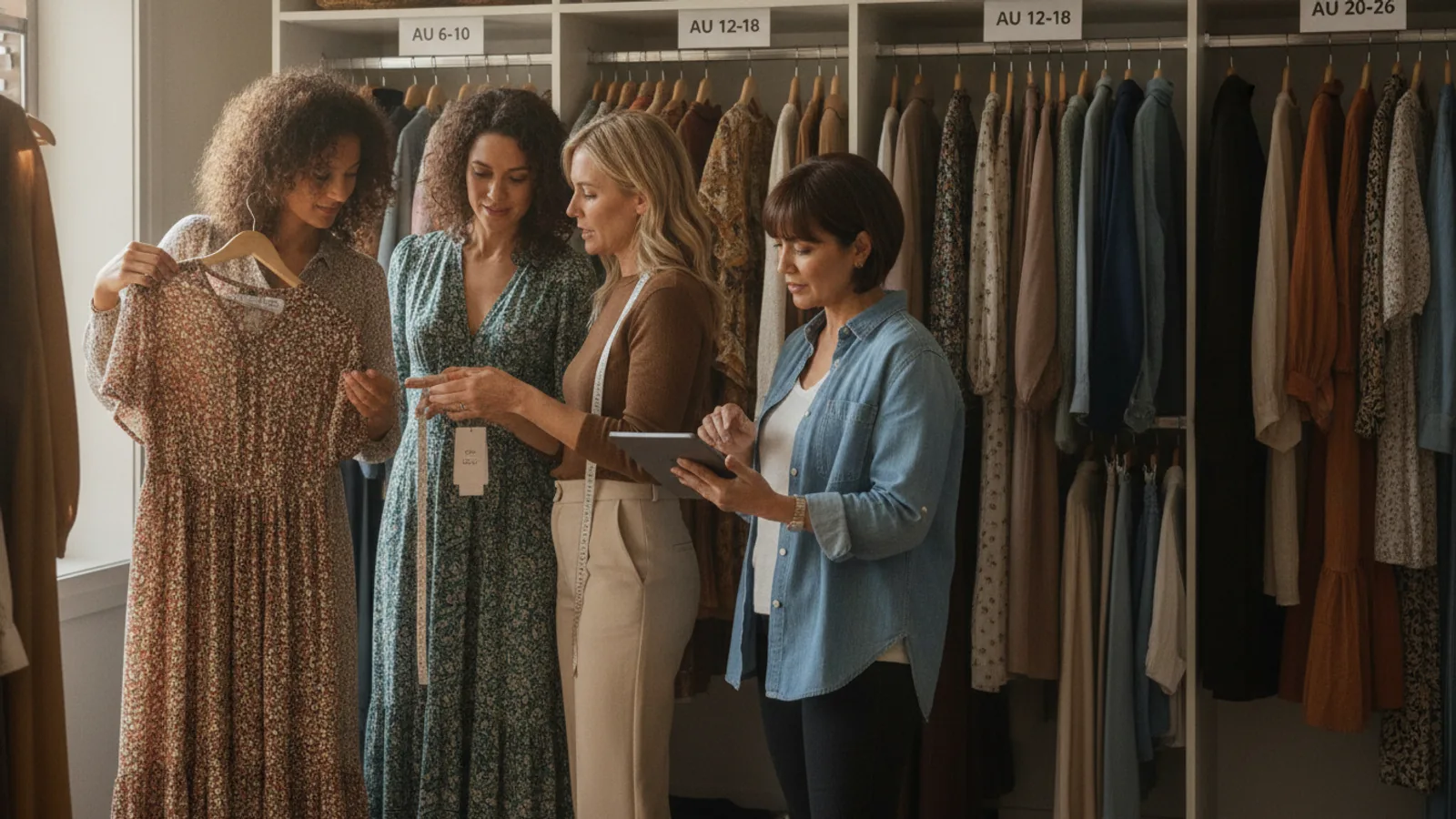
Open the label's own size chart, not a marketplace summary or a third-party conversion table, and check whether it lists body measurements or garment measurements. Body measurements tell you what shape the label expects; garment measurements tell you the actual dimensions of the finished item. A useful label usually provides both, or at least clearly states which one it uses. Compare your recorded numbers against the chart and note where you sit, for example between two sizes. If the chart only offers small, medium, and large with no numbers, that is a warning sign, because you cannot verify fit. Check whether the chart covers every size the label sells, including extended sizes, and whether it separates categories such as tops and bottoms, since one generic chart rarely serves both well.
Look for fit notes and model details
Product pages often include a short description of how the garment fits, such as relaxed, fitted, or true to size, along with the height and size worn by a model. These details help you judge whether the label understands its own range. Read the notes for the specific item, because two dresses from the same label can fit differently depending on fabric and cut. Check whether the label mentions stretch, lining, or adjustable features, since these affect how forgiving a size will be. If the page says nothing about fit and shows no measurements, treat that as a gap. A label that regularly publishes fit notes and model information is more likely to serve a broad range of bodies honestly. Note anything useful in your notebook so you can compare across several labels later.
Compare across several labels
Build a shortlist of four or five labels that seem promising, then compare them using the same criteria. Check the smallest and largest sizes each one offers, whether measurements are published for each size, and whether the range covers your measurements comfortably. Look at the number of distinct sizes rather than just the words used to describe them, because a label with ten real sizes usually serves more people than one with three broad categories. Write a simple table in your notebook with columns for label, size range, measurements published, and fit notes. This comparison reveals patterns quickly. A label that appears inclusive in its marketing but publishes no measurements for larger sizes is less useful than one with plain numbers and a clear chart, even if its photography is less polished.
Check returns and sizing help
Before committing, read how the label handles exchanges and returns, and whether it offers any sizing assistance such as a fit guide, a chat service, or a measurement helpline. A generous, clearly explained returns process makes it low risk to test an unfamiliar size range. Look for the time window, the condition required, and who pays for return postage, then note these details. Also check whether the label provides a size recommendation tool and whether it asks for your measurements or just your usual size, since the former is more reliable. If the policy is vague or hard to find, that is useful information too. A label that supports customers through the sizing process is more likely to keep a genuinely useful range on sale rather than quietly narrowing it.
Test with one item and review
Order or try a single item from a promising label rather than several at once, so you can judge the fit without confusion. When it arrives, compare the garment's flat measurements against the chart and against your own body measurements, then note whether the label's chart was accurate. Wear it for a normal day to see how the fabric behaves and whether the size stays comfortable. If it fits well, you have found a label worth returning to and can record your size for that category. If it does not, note exactly where it differed, because that tells you whether to size up, size down, or avoid that cut. Over a few tests, you build a personal map of which Australian labels genuinely serve your measurements across their range.
Quick Reference
| Situation | Action | Why it helps |
|---|---|---|
| You find a label with a wide size range but no numeric measurements. | Look for a separate detailed size chart page or contact the label directly to ask for body and garment measurements before buying. | A wide range means little if you cannot match your measurements to a specific size, and asking directly often reveals whether the label tracks its own fit data. |
| Your measurements fall between two sizes on the chart. | Compare the garment's expected stretch and cut, then choose the size closer to your largest measurement for woven fabrics or the smaller size for very stretchy knits. | Woven fabrics have little give, so fitting the larger measurement prevents strain, while stretchy knits can comfortably accommodate a slightly smaller size. |
| A label's sizing seems inconsistent between categories. | Record your size separately for tops, bottoms, and dresses, and always check the chart for the exact category before ordering. | Different blocks and patterns are used for different garment types, so a single size number rarely carries across a whole range reliably. |
Common Issues
- The size chart only lists small, medium, and large.: Search the label's help pages for a more detailed chart, or contact them and ask for body measurements across the full range. If none exists, compare the garment's flat measurements from the product photos and description instead, and treat the purchase as a test with a return option in mind.
- Your usual size fits in one style but not another from the same label.: Check the fit notes and fabric composition for each style separately, because cut and stretch change the outcome. Record the measurements of the styles that fit you well, then compare future items against those numbers rather than against the size name alone.
- The label's largest size still does not cover your measurements.: Look for labels that publish measurements up to and beyond your numbers, and check whether they offer made-to-measure or adjustable styles. Note the gap between your measurement and their largest size so you can judge quickly whether a label is worth revisiting later.
Advanced Tips
- Keep a running measurement log for each label you try, including the date, the garment, the size ordered, and how it fit, so patterns appear after only a few purchases.
- Check whether a label publishes its size chart as an image or as selectable text, since text-based charts are easier to search, copy into notes, and compare across several labels at once.
- Look at customer fit comments for mentions of specific measurements rather than general praise, because detailed comments reveal whether the chart matches real garments.
Final Checklist
- Your own bust, waist, hip, and inseam measurements are recorded in centimetres and recently checked.
- You have compared at least three labels using the same criteria for size range, published measurements, and fit notes.
- You know the return window, condition requirements, and who covers return postage for any label you plan to test.
- You have planned to test one item at a time and to record how the chart compared with the garment that arrived.
FAQ
How can I tell if a size range is genuinely useful?
A useful range publishes numeric measurements for every size it sells, covers categories separately, and provides fit notes for individual styles. If a label only uses vague size names with no numbers, you cannot match your body to it reliably, so treat that as less useful regardless of how wide the range appears in marketing.
What should I do if my measurements fall between two sizes?
Check the fabric and cut before deciding. Woven, structured garments usually fit better in the size closer to your largest measurement, while stretchy knits can often accommodate the smaller size. Compare the garment's flat measurements if they are published, and use the return policy as a safety net for your first test.
Why do sizes differ between Australian labels?
There is no single enforced sizing system across Australian fashion, so each label develops its own blocks and grading. That is why the same size name can measure differently from one label to the next. Always check the specific chart for the exact garment, and keep your own measurements on hand for a fast, reliable comparison.