How To Use An Australian Clothing Returns Policy Checklist
A practical step-by-step guide to how to use an Australian clothing returns policy checklist, including preparation, instructions, common issues, tips, and next steps.
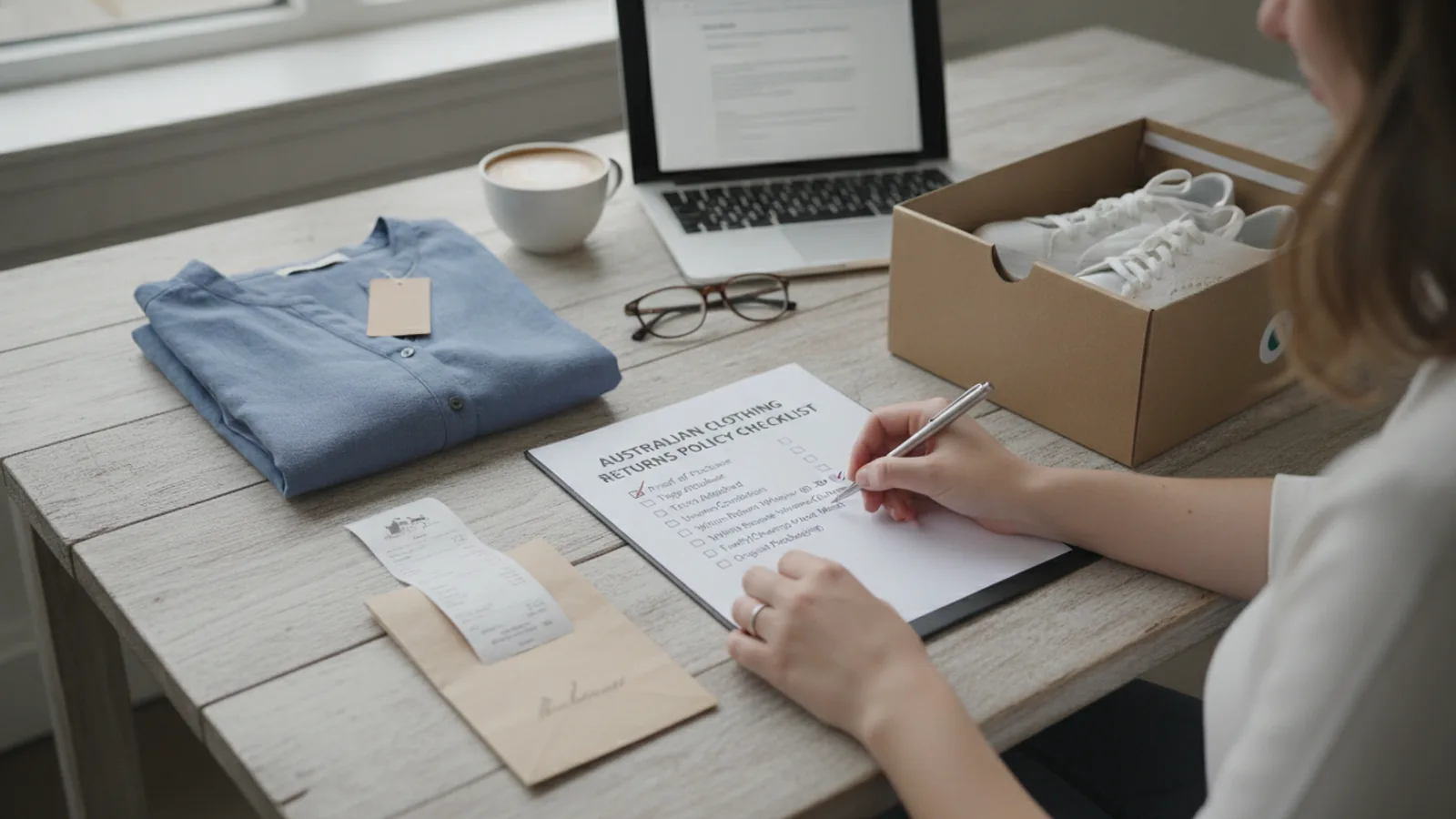
How To Use An Australian Clothing Returns Policy Checklist
An Australian clothing returns policy checklist helps you understand your rights and the store's rules before you buy or return an item. It guides you through checking the policy, keeping proof of purchase, and communicating clearly with the retailer. Using a checklist reduces stress, saves time, and helps you get a fair outcome whether you are returning faulty goods or changing your mind.
Fast Answer
- Always check the store's returns policy before buying, and keep your receipt or proof of purchase in a safe place.
- If an item is faulty, you are entitled to a remedy such as a repair, replacement, or refund under Australian Consumer Law.
Before You Start
- Locate the store's returns policy, either on the receipt, the store's website, or ask a staff member for a printed copy.
- Gather your proof of purchase, such as a receipt, bank statement, or order confirmation email, to show you bought the item.
- Check the item's condition and packaging, and note any signs of wear, damage, or missing parts before you return it.
- Write down the reason for the return and what outcome you want, such as a refund, exchange, or repair, to stay clear and calm.
Step-by-Step Instructions
Find and read the returns policy
Start by finding the store's returns policy. Look on the receipt, the store's website, or ask a staff member for a copy. Read it carefully to learn the time limit for returns, what condition items must be in, and whether you need the original packaging. Check if the policy covers change-of-mind returns or only faulty items. This matters because knowing the rules upfront helps you avoid surprises and prepare your case. If the policy is not clear, ask for clarification in writing, such as an email, so you have a record. Make a note of the key points, like the number of days allowed and any exclusions. This step sets the foundation for a smooth return and helps you speak confidently with staff.
Check your proof of purchase
Next, gather your proof of purchase. This could be a paper receipt, a bank or credit card statement, an email confirmation, or a loyalty card record. The store may accept any of these as evidence of purchase. If you paid by card, your statement can show the transaction. If you bought online, check your email for the order confirmation. Having proof makes it harder for the store to deny your return. If you have lost the receipt, ask the store if they can look up your purchase using your card details or loyalty account. Remember, under Australian Consumer Law, you do not always need a receipt for faulty goods, but it helps. Keep your proof safe and make copies if needed.
Assess the item's condition
Examine the item carefully before returning it. Check for any damage, wear, or missing parts. If the item is faulty, note exactly what is wrong, such as a broken zip or a tear in the fabric. If you are returning because you changed your mind, ensure the item is unworn, unwashed, and still has its tags attached. The store's policy will state what condition is required. Taking photos of the fault or the item's condition can be useful evidence. This step is important because the store may refuse a return if the item is not in a resalable condition. Be honest about the condition and prepare to explain it clearly. If the item is faulty, you have stronger rights, so highlight that.
Contact the store or visit in person
Now contact the store to start the return process. You can visit in person, call, or email, depending on the store's preferred method. If you go in person, bring the item, your proof of purchase, and any photos or notes. Speak calmly and clearly state that you want to return the item and why. If you are emailing, write a polite message explaining the issue and attach copies of your proof of purchase and photos. Ask for a specific outcome, such as a refund, exchange, or repair. Keep a record of who you spoke to, the date, and what was agreed. This step is where you present your case, so being organised and polite helps. If the staff member is unhelpful, ask to speak to a manager.
Understand your rights and remedies
Know your rights under Australian Consumer Law. If an item is faulty, not as described, or unfit for purpose, you are entitled to a remedy. The remedy could be a repair, replacement, or refund, depending on the problem. For major faults, you can choose a refund or replacement. For minor faults, the store may choose to repair it first. You do not have to accept a credit note instead of a refund for faulty goods. If you are returning because you changed your mind, your rights depend on the store's policy. This step matters because knowing your rights gives you confidence to ask for what you are entitled to. If the store refuses, politely explain your understanding and ask for the policy in writing.
Follow up and keep records
After you have made your return request, follow up to ensure it is processed. If you returned the item in person, ask for a receipt or confirmation of the return. If you posted it, keep the tracking number and a copy of the postage receipt. Note the date you returned the item and the name of the staff member who helped you. If you do not hear back within a reasonable time, contact the store again. Keep copies of all emails, messages, and notes. This step is important because it creates a paper trail if you need to escalate the issue. If the store does not resolve the problem, you can contact your state or territory consumer affairs office for help. Being persistent and organised often leads to a fair outcome.
Quick Reference
| Situation | Action | Why it helps |
|---|---|---|
| You lost the receipt for a faulty item. | Show another proof of purchase, such as a bank statement or email confirmation, and explain the fault clearly to the store. | Under Australian Consumer Law, you do not need a receipt for faulty goods, but other evidence helps the store verify your purchase. |
| The store says no refunds on sale items. | Ask if the item is faulty. If it is, politely explain that your consumer rights still apply and request a remedy. | Stores cannot override your rights under Australian Consumer Law, even for sale items, if the product is faulty. |
| You changed your mind about an item. | Check the store's returns policy for change-of-mind returns and see if you meet the conditions, such as tags still attached. | Change-of-mind returns are not covered by Australian Consumer Law, so the store's policy decides whether you can return the item. |
Common Issues
- The store refuses a return without a receipt.: If the item is faulty, explain that you have other proof of purchase, such as a bank statement or email. If the store still refuses, ask to speak to a manager and mention your rights under Australian Consumer Law. Keep a record of the conversation.
- The returns policy is not clear or seems unfair.: Ask for a written copy of the policy. Read it carefully and compare it with your rights. If you believe the policy is unfair, contact your state or territory consumer affairs office for advice. They can help you understand if the policy is lawful.
- You missed the return deadline stated in the policy.: If the item is faulty, the deadline may not apply because your rights under Australian Consumer Law take priority. Explain the fault and ask for a remedy. If it is a change-of-mind return, politely ask if the store can make an exception, but understand they may refuse.
Advanced Tips
- Keep a dedicated folder for receipts and returns, either digital or physical, so you can find proof quickly when needed.
- When returning online purchases, check who pays return postage. Some stores cover it for faulty items, but not for change-of-mind returns.
- If a store offers a credit note instead of a refund for a faulty item, you can politely decline and ask for a refund or replacement, as you have the right to choose for major faults.
Final Checklist
- I have read and understood the store's returns policy, including any time limits and condition requirements.
- I have gathered my proof of purchase, such as a receipt, bank statement, or order confirmation.
- I have checked the item's condition and taken photos of any faults or damage.
- I have a clear reason for the return and know what outcome I want, such as a refund, exchange, or repair.
FAQ
What is an Australian clothing returns policy checklist?
It is a step-by-step guide to help you understand and navigate a store's returns policy when returning clothing. It covers checking the policy, preparing proof of purchase, assessing the item, contacting the store, knowing your rights, and following up. Using a checklist makes the process smoother and helps you get a fair result.
Do I need a receipt to return faulty clothing?
Not always. Under Australian Consumer Law, you do not need a receipt for faulty goods, but you do need to show proof of purchase. This could be a bank statement, email confirmation, or loyalty card record. If you have no proof, the store may still help, but it is easier if you have something to show.
Can a store refuse a refund if I changed my mind?
Yes, if you simply changed your mind, the store's returns policy decides whether you can get a refund, exchange, or credit note. Australian Consumer Law does not cover change-of-mind returns. Always check the policy before buying, and keep the item in resalable condition with tags attached if you might return it.