How To Build A Wardrobe Around The Clothes You Repeat
A practical step-by-step guide to how to build a wardrobe around the clothes you repeat, including preparation, instructions, common issues, tips, and next steps.
How To Build A Wardrobe Around The Clothes You Repeat
Build a wardrobe around the clothes you actually repeat by tracking what you wear for two weeks, sorting those items, identifying the small number of outfits you rely on, and keeping only pieces that support those outfits. This method reduces decision fatigue, saves money, and creates a closet where every item earns its place through real use.
Fast Answer
- For two weeks, note every item you wear and how often you repeat it. Keep the repeat winners at eye level, and move everything else to a trial box.
- Build outfits from your top repeated pieces first. Only add a new item if it works with at least three outfits you already wear often.
Before You Start
- Set aside two weeks where you wear your normal clothes without buying anything new, so your notes reflect real habits rather than wishes.
- Create a simple tracking sheet or use a notes app to record the date, the items you wore, and a quick comfort or confidence score for each day.
- Choose one place to store clothes you are unsure about, such as a lidded box or a separate shelf, so you can test life without them.
- Plan a quiet hour after the tracking period to review your notes, count repeats, and make decisions without rushing or distraction.
Step-by-Step Instructions
Track your real repeats for two weeks
For fourteen days, write down every clothing item you put on, including shoes and layers. At the end of each day, mark whether you felt comfortable, confident, and temperature-appropriate. Do not change your routine or dress up for the tracking period. The goal is a truthful record of what you reach for when no one is watching. After two weeks, count how many times each item appears. Most people find that a small group of pieces shows up again and again while many others never leave the closet. This count is your foundation. It turns guesses into evidence and shows you which clothes already form the core of your wardrobe. Without this step, you might build around items you like in theory but never wear in practice, and the closet will drift back to clutter.
Sort repeated items into a core pile
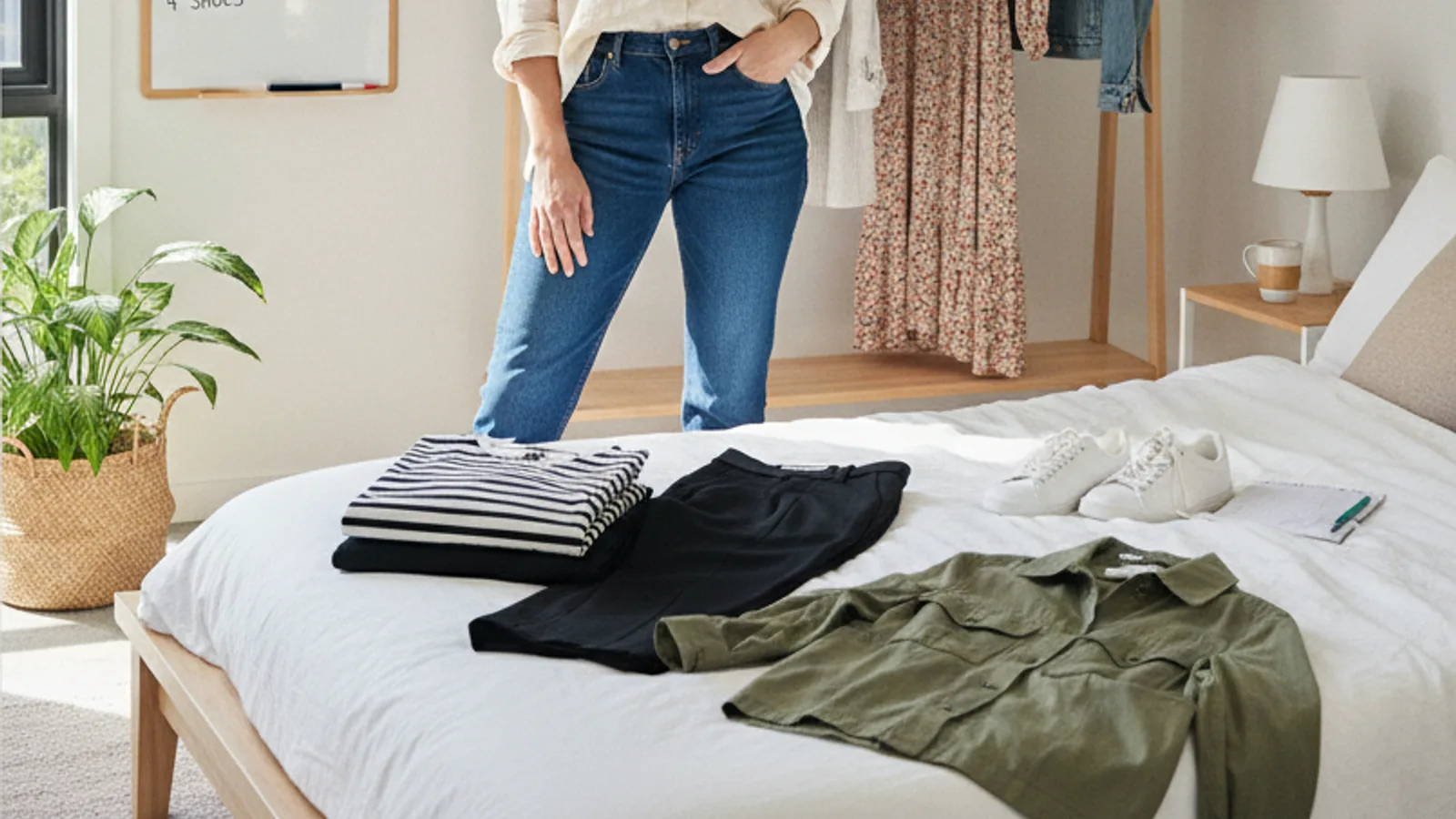
Take every item that appeared three or more times during tracking and place it on your bed or a clean surface. These are your core pieces. Look at what they have in common: color, fabric weight, fit, and how easy they are to wash. Group them by type, such as tops, bottoms, and outer layers, then notice which combinations you wore most often. For example, you might see that two pairs of trousers and four tops created most of your outfits. This step matters because your core pile is the spine of the wardrobe. When you see it clearly, you can stop buying random pieces and start filling actual gaps, like a second layer that works with the trousers you already wear. The check is simple: every core item should have at least two partners in the pile. If it does not, set it aside and keep reading.
Move unused clothes to a trial box
Everything that did not appear in your tracking notes goes into a trial box or a separate shelf, but do not donate it yet. Live with only your core pieces for two more weeks. Keep a small note of any moment when you miss an item from the box. This trial period shows whether an unused piece is truly unnecessary or whether it serves a rare but real purpose, such as formal wear or weather-specific gear. At the end of the trial, review the box. Items you never missed and never needed can leave your main closet. Items you genuinely missed, even once, can return, but only if they pair with your core pieces. This check prevents two common mistakes: throwing away something useful and keeping something that only adds noise. The box is a pause, not a punishment.
Map your repeat outfits and gaps
Using your core pile, write down the five to seven outfits you wore most often during tracking. Give each outfit a short name, such as work basic or weekend walk, and list the exact items in it. Next to each outfit, note any gap that made it harder to wear: a missing belt, a layer that did not match, a shoe that hurt after an hour. These gaps are your only valid shopping list. This step turns a vague feeling of having nothing to wear into specific, solvable problems. The check is to test each gap against your core pieces: can you fill it with something that works in at least three of your named outfits? If yes, it is worth looking for. If no, it is probably a one-off need that does not belong in your main wardrobe. Keep the outfit map where you can see it when getting dressed.
Shop only for the gaps you mapped
When you look for a missing piece, bring your outfit map and your core pile photos with you, whether you are in a store or browsing online. Check that the new item matches the colors, fabric weights, and care needs of your repeat outfits. Try it on with at least three core pieces before deciding. Ask yourself whether you would wear it at least three times in the next two weeks. If the answer is no, leave it. This step protects the wardrobe you built from the drift back to clutter. The check is practical: after trying the item, can you name the exact outfits where it will appear? If you cannot, it is not a gap filler. This rule is strict on purpose. A wardrobe built around repeats stays useful only when every new addition has a clear job and a clear partner. Write down the outfits you would wear it with before you buy.
Reset your closet layout for repeats
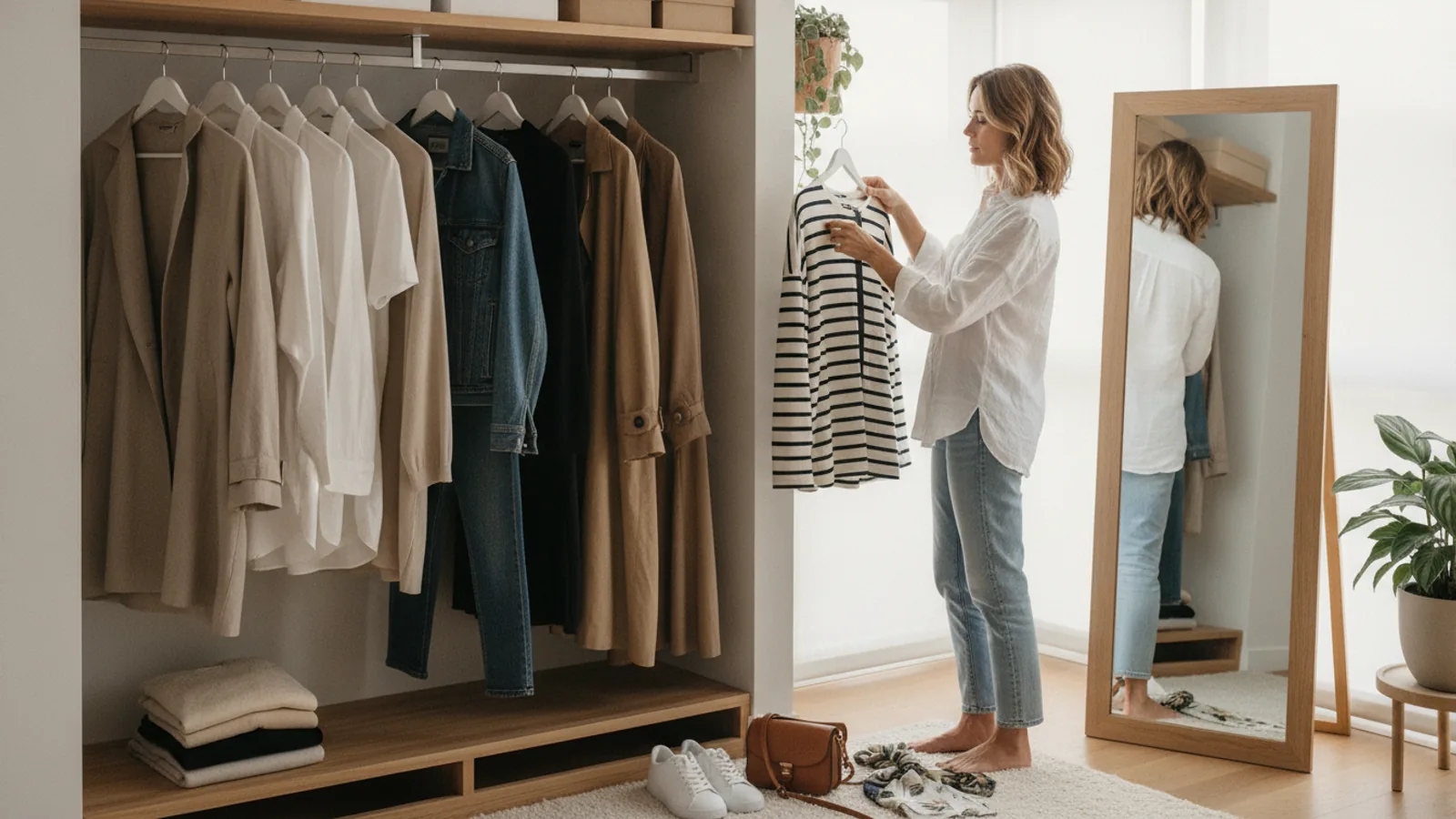
Place your core pieces at eye level and within easy reach, grouped by outfit or by type, whichever makes dressing faster for you. Put the trial box items on a high shelf or in a separate space. Use matching hangers if it helps you see the clothes, but do not buy new storage until you have lived with the core layout for a week. The goal is to make your repeated items the path of least resistance. When your best outfits are the easiest to grab, you naturally wear them more and ignore the rest. The check is to stand in front of the closet and see if you can build three of your named outfits without moving anything out of the way. If you cannot, adjust the layout until you can. This final step locks in the habit and keeps the wardrobe working long after the tracking period ends.
Quick Reference
| Situation | Action | Why it helps |
|---|---|---|
| You feel like you have nothing to wear even though the closet is full. | Open your tracking notes, count the items you wore three or more times, and pull only those pieces to the front of the closet. Ignore everything else for one week. | This puts your proven repeats in plain sight and breaks the habit of scanning past clothes that never worked for you in the first place. |
| You are tempted to buy a new item because it is on sale or looks good on someone else. | Check the item against your outfit map and try it on with at least three core pieces. If it does not complete a named outfit, do not buy it. | A low price does not matter if the item has no partner in your wardrobe. This check keeps money and space for pieces you will actually repeat. |
| An unused item has been in your trial box for two weeks and you never missed it. | Remove it from the main closet and decide its next home, such as a donation bag or a storage bin for a specific future need. | The trial box gives you evidence instead of guilt. If you did not miss it during normal life, it is not supporting your repeat outfits. |
Common Issues
- You keep clothes for a future event or a different version of your life.: Write down the exact event and date, if any, when you would wear the item. If you cannot name a real event within the next few months, move the piece to long-term storage or let it go. Your main closet should serve your current, repeated life.
- Your repeat items are worn out or uncomfortable but you keep wearing them anyway.: Check the condition of each core piece. If a favorite has a stain, a broken seam, or a poor fit, repair it or replace it with a similar item that works in the same outfits. Do not let a worn-out repeat piece become a daily annoyance.
- You finish the tracking period and still feel unsure about what to keep.: Extend the trial box period by one more week and keep a miss list. At the end, return only items you actually missed and that pair with your core pieces. If the list is empty, let the box items go without guilt.
Advanced Tips
- Once a season, repeat the two-week tracking exercise with your current core pieces to catch changes in your routine, comfort, or the weather where you live.
- Keep a small repair kit with needless thread and a spare button near your closet so you can fix small problems before they send a repeat piece to the back of the shelf.
- When you find a core piece you truly repeat, consider buying a second one in the same color and fit if it is available, so you are not left without it when it needs washing.
Final Checklist
- You have completed a two-week tracking period and counted how often each item was worn.
- Your core pile contains only items worn three or more times, and each one has at least two partners in the pile.
- You have a written map of your five to seven most repeated outfits, including any real gaps.
- Unused items have been tested in a trial box, and your closet layout now puts repeat pieces within easy reach.
FAQ
How long should I track my clothes before building the wardrobe?
Two weeks is enough to see clear repeat patterns for most people. If your life includes a mix of work, home, and social days, track through a full week of each so the notes reflect your real routine. If two weeks feels too short, extend to three, but do not track for months without acting, because the goal is to start using the evidence.
What if I need special clothes for rare events, like formal wear or extreme weather?
Keep those items in a separate storage area, not in your main closet. They are not part of your repeat wardrobe, but they still have a real purpose. Store them clean and protected, and note what event or condition they are for. This keeps your daily closet focused while making sure you are not caught without the right gear when a rare need actually arrives.
Do I have to get rid of everything that is not a repeat item?
No. The method asks you to move unused items out of the main closet for a trial period so you can see whether you miss them. After the trial, you decide what to keep, store, or pass on. Some pieces may return if they fill a real gap and pair with your core items. The point is to make your repeats easy to reach, not to force a strict rule.