How To Make A Simple Outfit Formula For Busy Mornings
A practical step-by-step guide to how to make a simple outfit formula for busy mornings, including preparation, instructions, common issues, tips, and next steps.
How To Make A Simple Outfit Formula For Busy Mornings
A simple outfit formula turns busy mornings into a calm two-minute decision instead of a stressful search. By choosing a small set of colors, a few reliable shapes, and a repeatable method, you can get dressed quickly while still looking put together. This guide builds a personal formula step by step, from sorting your closet to checking the weather and laying out clothes the night before.
Fast Answer
- Pick two neutral base colors and one accent color, then choose clothes only in those shades so every top matches every bottom.
- Keep three complete outfits ready at the front of your closet, and repeat them on a weekly rotation so mornings need no thinking.
Before You Start
- Set aside one quiet hour to pull every item from your closet and drawers, then sort clothes into keep, repair, and donate piles.
- Write your three chosen base colors on a small card and tape it inside the closet door as a quick reminder while you choose.
- Wash and fold a full week of basics so you always have clean tops, bottoms, and socks ready before the workweek begins.
- Charge a small bedside lamp or keep a simple light near the closet so you can dress without waking anyone else in the room.
Step-by-Step Instructions
Choose three colors that always match
Start by choosing two neutral colors and one accent color. Neutral colors are calm shades such as black, gray, navy, beige, brown, or white. The accent color is the one that adds interest, such as green, red, or blue. Write these three colors on a card and keep it where you dress. The goal is that any top matches any bottom without thought. Pick colors you already own in large amounts, because buying a new wardrobe is not the point. Hold two items together near a window in daylight to see how the colors look together. A practical check is to pull five tops and five bottoms and test every pairing. If most pairs look fine, your colors work. This check matters because a formula built on colors you do not own will fail on the first busy morning.
Pick two bottom shapes you trust
Choose two bottom shapes that fit well and feel comfortable for long days. Common choices are straight or relaxed trousers, jeans, a simple skirt, or easy shorts for warm weather. Keep both shapes in your chosen neutral colors so they work with every top. Try each pair on and check three things: the waistband stays put when you sit, the length works with your usual shoes, and the fabric moves without pulling. A practical check is to sit, stand, and walk a few steps in front of a mirror. If you have to tug or adjust the clothes, set them aside. This check matters because uncomfortable bottoms make any outfit feel wrong, and you will avoid them on busy mornings even if they match perfectly. Keep only the shapes that pass, and remove the rest from your daily area.
Limit tops to simple, layer-friendly cuts
Select four to six tops in your chosen colors. Favor simple cuts such as plain tees, button-front shirts, fine-knit sweaters, or simple blouses that tuck or hang neatly. Avoid busy prints, odd lengths, and cuts that only work with one specific bottom. A practical check is to pair each top with both of your bottom shapes and one light layer, such as a cardigan or open jacket. If a top works in all those combinations, it earns a place. This check matters because tops are the piece you change most often, and a top that matches only one bottom breaks the formula. Store the winners together on one rail or shelf so choosing a top becomes a single glance. Move everything else to a different area so it does not crowd your daily choices.
Add one light layer and one outer layer
Choose one light layer, such as a cardigan, zip top, or simple overshirt, and one outer layer for weather, such as a rain shell or warm coat. Both should sit in a neutral color from your list. The light layer handles cool rooms and changing temperatures, while the outer layer handles the walk outside. A practical check is to put on a full outfit, add both layers, and move your arms forward, up, and across your body. If the layers restrict you or bunch badly, choose a different size or cut. This check matters because layers are where outfits often fail, and a layer that fights your movement will be left behind when you are in a hurry. Keep both layers near the door or at the end of your closet rail.
Set a weekly rotation you can repeat
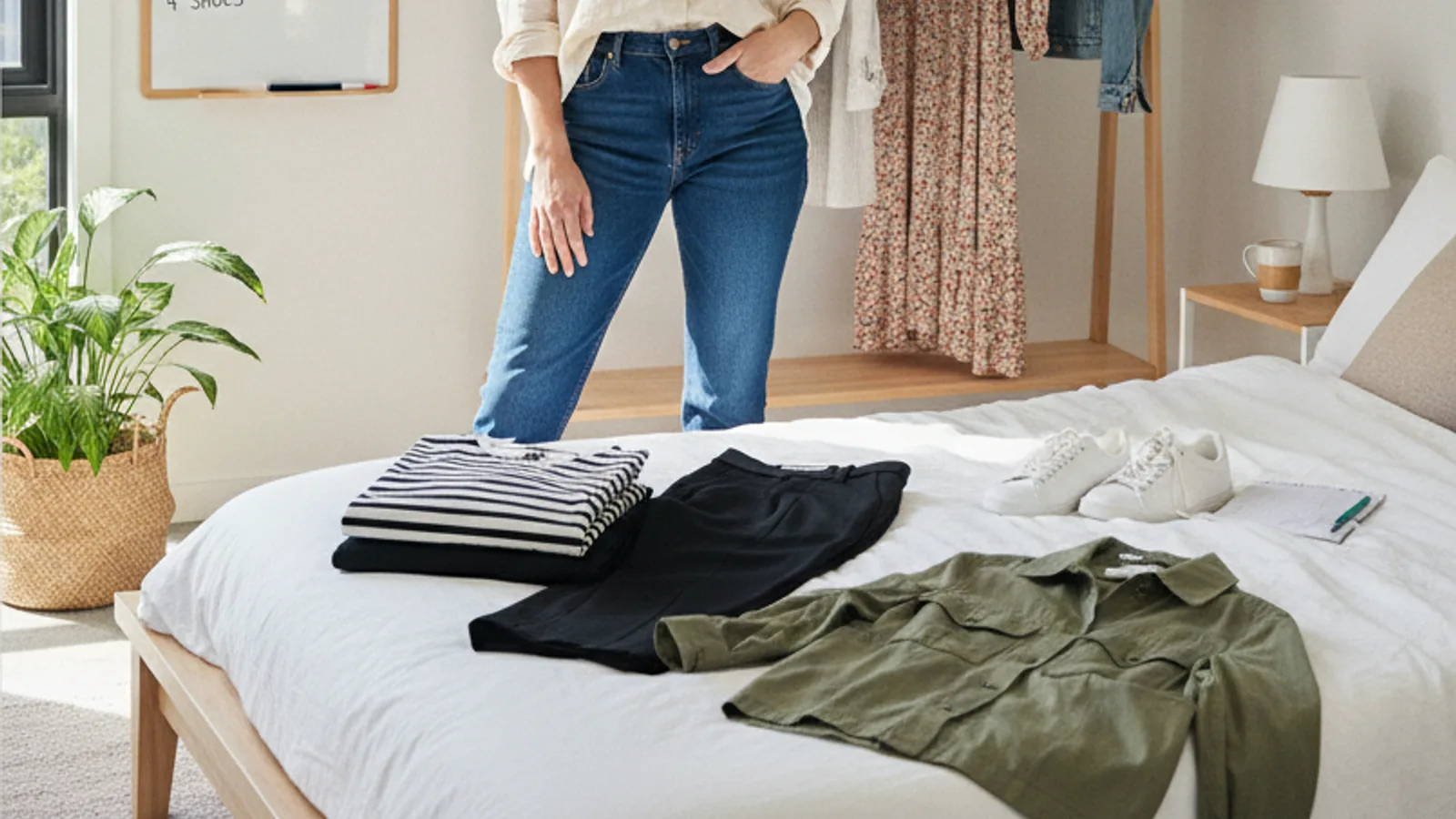
Build a simple rotation of five complete outfits for the working week. Write each outfit on a small list: bottom, top, light layer, shoes, and any accessory. Repeat the same rotation each week, or swap two outfits when you want a change. A practical check is to hang each full outfit on one hanger or stack it in one basket, then count five finished sets before the week starts. This check matters because a rotation removes the daily decision, and a counted set proves you have enough clean clothes. If you run short, add one more bottom or top until five sets are ready. Store the list where you dress, and update it only when a piece wears out. The rotation should feel calm, not strict, so adjust it when the season changes.
Run a two-minute morning check
Each morning, follow the same short routine. First, look at the weather forecast for the day and note rain, wind, or a big temperature change. Second, take the prepared outfit from its hanger or basket. Third, put on the clothes and check one full view in a mirror: front, side, and back. Fourth, confirm your shoes and bag match the plan. The whole check should take about two minutes. A practical check is to ask one simple question: can I sit, walk, and reach comfortably right now? If yes, you are done. This check matters because small problems, such as a twisted hem or a missing belt, are easy to fix at home and awkward to fix later. Keep the routine identical each day so it becomes automatic.
Quick Reference
| Situation | Action | Why it helps |
|---|---|---|
| You woke up late and have only a few minutes to dress. | Take the outfit already hanging at the front of your closet, put it on without comparing other options, and do one quick mirror check for front, side, and back. | Prepared outfits remove the slowest part of the morning, which is choosing and comparing, while the mirror check still catches a twisted hem or missing layer. |
| The weather changed and your planned outfit feels wrong. | Keep the same bottom and top, then swap only the light layer or outer layer for a warmer or lighter option from your prepared set. | Changing one layer is fast and keeps your color formula intact, so you stay within the plan instead of rebuilding the whole outfit from scratch. |
| You feel bored with the same weekly rotation. | Swap two complete outfits between days, or add one new accessory in your accent color, without changing the base colors or the trusted shapes. | Small swaps refresh the look while protecting the matching system, so you avoid buying new clothes or breaking the formula that keeps mornings calm. |
Common Issues
- Your closet holds many clothes but few complete outfits.: Pull out every piece that does not match your three chosen colors or your two trusted bottom shapes, and move those pieces to a separate storage area. Keep only items that pair with at least two other pieces in your daily area.
- Laundry does not keep up with your weekly rotation.: Wash one load of basics in the middle of the week instead of waiting for the weekend, and keep two spare clean tops and one spare bottom set aside as a buffer for busy days.
- You keep choosing clothes that are uncomfortable by mid-morning.: Before an item joins your rotation, wear it for a short errand and check the waist, shoulders, and length after sitting and walking. Remove any piece that needs constant adjusting, even if you like the color.
Advanced Tips
- Build a small seasonal box for each kind of weather so your daily closet holds only what fits the current season.
- Keep a short note of outfits that earned compliments or felt best, and move those sets to the front of your rotation.
- Choose one accent color per season and retire it when the season ends, which keeps the formula fresh without adding clutter.
Final Checklist
- Your three colors are written down and your closet holds matching tops and bottoms in those shades.
- Two trusted bottom shapes and four to six simple tops are stored together within easy reach.
- Five complete outfits are prepared and counted before the week begins.
- A two-minute morning check covers weather, comfort, and one full mirror view.
FAQ
How many clothes do I really need for this formula?
A calm starting point is two bottom shapes in each of your neutral colors, four to six tops, one light layer, one outer layer, and two pairs of shoes that work with both bottoms. That set can create many combinations and still fit a normal laundry routine. Adjust the numbers to your climate, your laundry schedule, and any dress code you must follow, and check your own wardrobe before deciding what to keep.
What if my workplace or school has a dress code?
Read the current written policy or ask a supervisor or teacher directly, because rules about clothing can change and may differ by location or role. Once you know the limits, choose your colors and shapes inside those limits so the formula still works. This guide cannot confirm what your workplace or school allows, so treat their official information as the final word.
How do I handle very different weather in one day?
Check the forecast for the whole day, not just the morning, and prepare a light layer plus an outer layer that you can add or remove. Choose shoes and a bag that handle light rain if rain is likely. If you travel between heated and cold spaces, keep the light layer in your bag so you can adjust quickly without changing your base outfit.