How To Assess Fabric Composition When Shopping Online
A practical step-by-step guide to how to assess fabric composition when shopping online, including preparation, instructions, common issues, tips, and next steps.
How To Assess Fabric Composition When Shopping Online
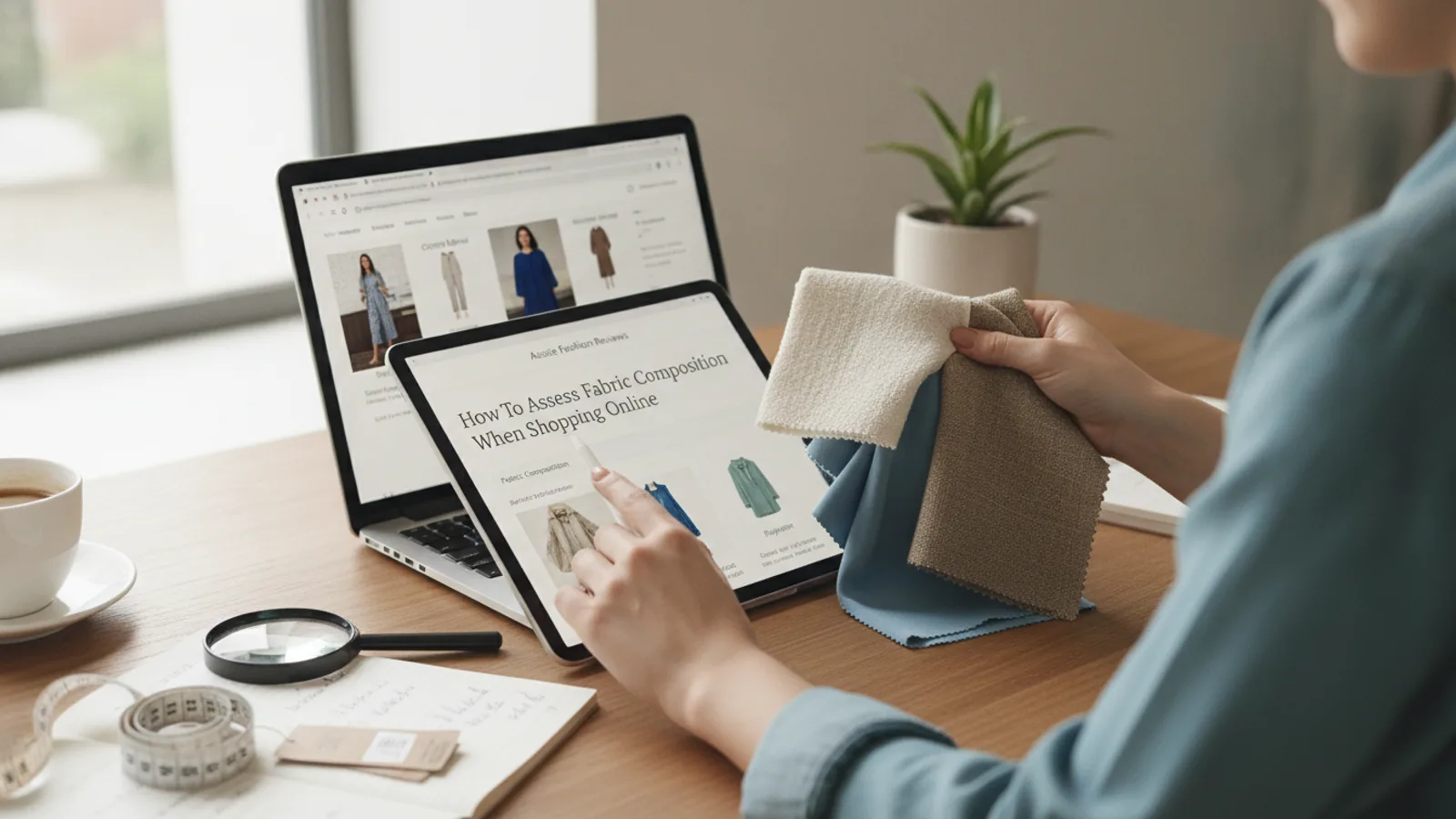
Assessing fabric composition when shopping online means reading material lists carefully, checking fiber percentages, and recognizing that images and vague labels can mislead. This guide gives a calm, practical method to judge what a garment is truly made of before you buy, so you can choose items that feel right and last well.
Fast Answer
- Check the product page for a fiber list with percentages, not just words like soft or premium.
- If the fabric details are missing or unclear, ask the seller for the exact fiber names and amounts before ordering.
Before You Start
- Open the product page on a larger screen so you can read the fine print in the description and specifications.
- Have a note open to record fiber names, percentages, and any care or feel claims you want to compare later.
- Find the size chart and care instructions, because they often hint at how the fabric behaves after washing.
- Decide your comfort limits, such as avoiding scratchy fibers or preferring breathable natural blends for daily wear.
Step-by-Step Instructions
Locate the official fiber list
Start by scrolling to the product details, specifications, or material section, not the headline or photo captions. You are looking for a list that names each fiber and, ideally, its percentage, such as cotton 95 percent and spandex 5 percent. This matters because a general phrase like soft blend tells you almost nothing about how the item will feel, breathe, or hold up. Write down the exact wording so you can compare it with other listings. If the page only shows a fiber name without amounts, that is a signal to keep reading other sections, such as the care label description or the returns policy. A complete fiber list with percentages is the foundation for every other check in this guide, so do not skip it or assume the image tells the whole story.
Check the order and percentages
Once you find a fiber list, read the order of ingredients and the percentages if they are shown. In most clothing descriptions, fibers are listed from the largest amount to the smallest, so the first name is usually the main material. Percentages tell you how much of that fiber you are actually getting. For example, a small amount of stretch fiber changes fit, while a high amount of a smooth synthetic can make fabric less breathable. This check matters because two items with the same fiber names can behave very differently if the amounts are reversed. If percentages are missing, search the page for a care label image or a specifications table. When no amounts appear anywhere, treat the fiber list as incomplete and move to the next step before deciding.
Judge feel from photos and wording
Photos cannot tell you composition directly, but they can show clues such as sheen, drape, and texture. A very shiny surface may suggest a smooth synthetic, while a matte, slightly uneven texture may suggest a natural fiber. Wording matters too: terms like crisp, fluid, brushed, or ribbed describe how the fabric is finished, not what it is made of. Use these clues only as hints, never as proof. This step matters because many shoppers mistake a nice photo for a complete material answer. To use this check well, compare the photo with the fiber list. If the image looks heavy and warm but the list shows a light, breathable fiber, ask the seller which detail is accurate. Keep your notes beside the listing so you can spot contradictions before you order.
Read care and washing guidance
Care instructions often reveal how a fabric is likely to behave over time. Look for guidance on washing temperature, drying method, ironing, and whether the item should be hand washed or dry cleaned. A garment that needs very gentle care may contain delicate fibers or a finish that can wear away. This check matters because the care label is written for the actual material, so it can confirm or contradict the marketing description. For example, if the page says the item is easy to machine wash but the care section advises cold hand washing, treat that as a conflict. Note the fiber names next to the care steps so you can see which material is driving the advice. If care details are missing, ask the seller for the exact label text before you buy.
Ask the seller precise questions
When the fiber list is unclear, send a short message that asks for exact fiber names and percentages. Use a simple request such as: please confirm the full material list with percentages for this item. Also ask whether the listing applies to all colors and sizes, since some sellers use different fabrics for different versions. This step matters because a direct answer creates a written record you can compare with the page. Keep your question specific and polite, and avoid asking for a general opinion about quality. If the seller replies with vague words like premium or high quality, ask again for the fiber names and amounts. If they cannot provide them, treat the composition as unknown and consider whether you are comfortable taking that risk. A clear answer is more useful than a confident tone.
Compare and decide before buying
Now put your notes together: fiber names, percentages, care guidance, and the seller's answer. Compare them against your own needs, such as breathability for warm rooms or durability for frequent wear. This final check matters because a single detail is rarely enough; composition is best judged as a pattern. If the fiber list is complete and matches the care advice, you can feel more confident. If details conflict or remain missing, decide whether the return policy gives you a safe way to check the item in person. Look for the return window and condition rules before ordering, and save screenshots of the listing and your messages. A calm decision now is better than a rushed purchase you regret later when the fabric arrives.
Quick Reference
| Situation | Action | Why it helps |
|---|---|---|
| The product page shows a fiber name but no percentages. | Message the seller and ask for the full material list with percentages, then wait for a written reply before ordering. | Percentages show how much of each fiber is present, which affects feel, breathability, and durability more than the fiber name alone. |
| The photo looks heavy but the fiber list suggests a light fabric. | Ask the seller to confirm which detail is correct and request a close-up photo of the actual fabric in natural light. | Photos can be styled or lit in ways that hide texture, so a direct confirmation prevents you from guessing based on an image. |
| Care instructions say dry clean only while the description says easy to wash. | Treat the care label as the stronger signal and ask the seller to confirm the exact label text on the item. | Care labels are written for the real material, so a conflict often means the marketing description is incomplete or out of date. |
Common Issues
- The listing uses vague words like soft blend or premium fabric.: Ask for the exact fiber names and percentages in writing, then compare that answer with the care instructions and any specifications table on the page.
- Different colors or sizes seem to use different materials.: Contact the seller and ask whether the fiber list applies to every version you are considering, and request confirmation for the exact color and size before you order.
- The fiber list is hidden in a photo of the label instead of the text.: Zoom in on the label image, write down every fiber name and percentage you can read, and ask the seller to confirm any part that is blurry or cut off.
Advanced Tips
- Compare the fiber order across several similar items to learn how a seller usually describes materials.
- Look for a finishing or treatment claim and ask whether it changes the fiber list or the care steps.
- Check the care label wording for heat limits, because some fibers need cooler washing or lower iron settings.
- Keep a small personal log of fiber blends you liked, so future online decisions become faster and calmer.
Final Checklist
- The listing shows a full fiber list with percentages, or the seller has confirmed them in writing.
- The care instructions match the fiber description and do not contradict the main product claims.
- You have noted the return window and condition rules in case the fabric does not match the description.
- You have saved the product page, fiber details, and seller messages for comparison after delivery.
FAQ
What if the product page has no fiber list at all?
Treat the composition as unknown and ask the seller for the exact fiber names and percentages in writing. If they cannot provide that information, decide whether you are comfortable ordering without it and check the return policy first.
Do photos ever show fabric composition?
Photos can hint at texture, sheen, and drape, but they do not prove what a garment is made of. Use them only as clues and always confirm composition through a fiber list, a care label, or a direct answer from the seller.
Why does the order of fibers matter?
The order usually reflects how much of each fiber is present, with the largest amount listed first. A different order can mean a very different feel, so read the list from top to bottom and check percentages when they are shown.