How To Pack Outfits For A Short Business Trip
A practical step-by-step guide to how to pack outfits for a short business trip, including preparation, instructions, common issues, tips, and next steps.
How To Pack Outfits For A Short Business Trip
This guide helps you pack a focused set of outfits for a short business trip, usually three to five days, using a simple plan that saves space and reduces stress. You will learn what to gather before packing, how to choose versatile pieces, how to fold and arrange them, and how to check nothing important is missing so you arrive ready for meetings and evening events.
Fast Answer
- Choose two neutral base colors and pack three tops, two bottoms, and one layering piece that all match each other.
- Roll or fold each outfit into its own bundle so you can pull out one complete set without unpacking everything.
Before You Start
- Check the trip agenda and note every event, from client meetings to casual dinners, so you know exactly how many outfits you truly need.
- Look up the local weather forecast for each day and write down expected temperatures, rain chances, and indoor air conditioning levels.
- Confirm the dress code for each event by asking your host or checking the invitation, because business casual can mean different things in different settings.
- Gather all clothing pieces in one place, including shoes and accessories, before packing so you can see the full set and remove anything that does not match.
Step-by-Step Instructions
Plan outfits by event, not by day
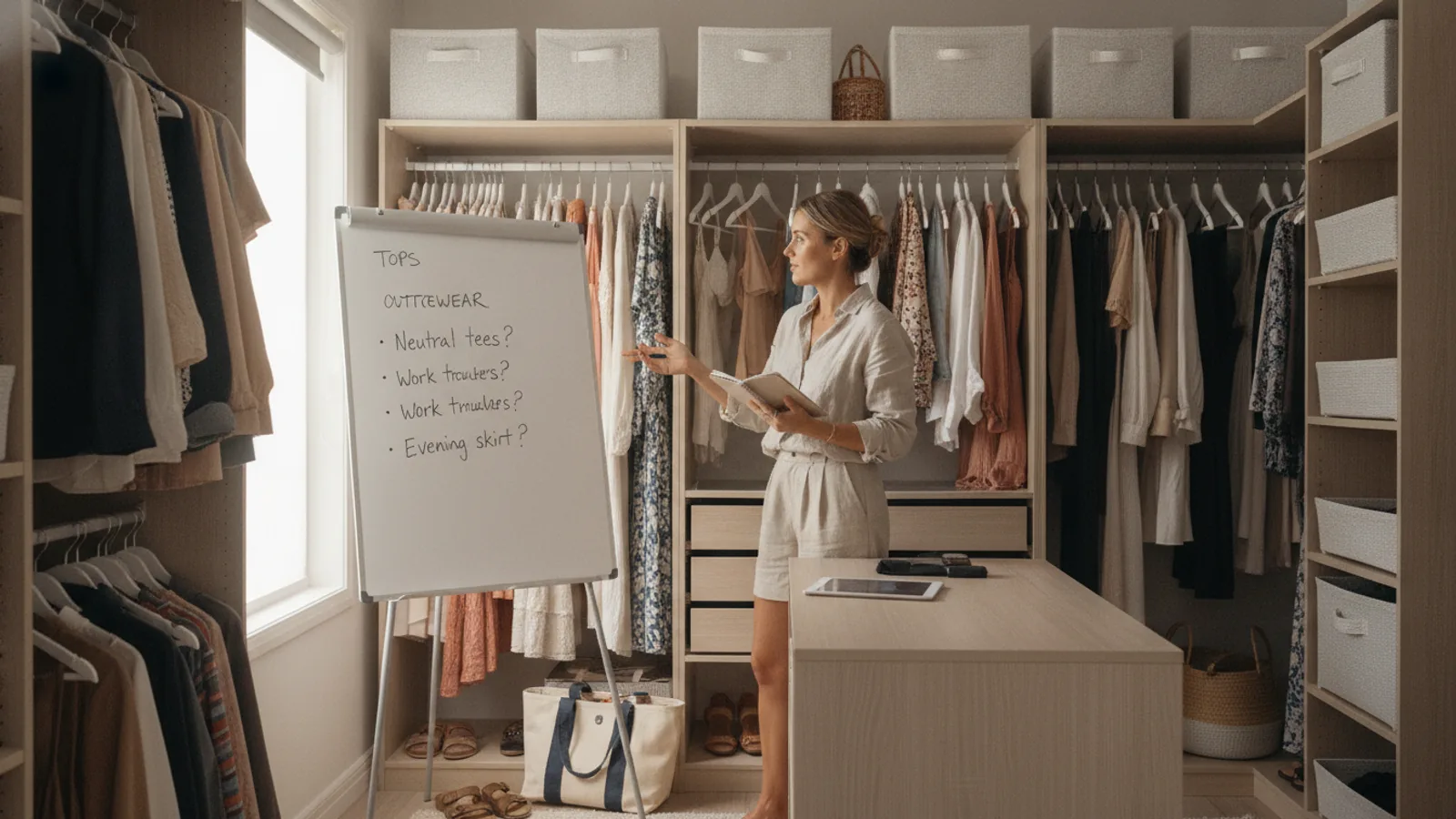
Start by listing every event on your trip, such as travel day, client meeting, team dinner, and return travel. Next to each event, write the level of formality and the number of hours you will be in that setting. Then assign one complete outfit to each event, reusing pieces where possible. For example, the same pair of dark trousers can work for a morning meeting and an afternoon presentation if you change the top and add a jacket. After you have your list, lay every assigned item on a bed or clean floor. Check that each outfit has a top, a bottom, appropriate shoes, and any needed layer. This order matters because planning around events prevents overpacking and ensures you never arrive at a meeting wearing the wrong level of dress.
Choose a tight color palette
Limit your clothing colors to two neutrals, such as navy and gray, plus one accent color. This restriction means every top can pair with every bottom, which multiplies your outfit options without adding bulk. Begin by selecting your two neutral bottoms, then add tops that match both. After that, add one layer, like a cardigan or blazer, that works over any of the tops. Finally, choose shoes that match the neutrals. When you finish, hold each piece next to the others and remove anything that clashes or only works with one other item. Checking color compatibility at this stage is important because a single mismatched piece can force you to pack an extra outfit, defeating the purpose of a small capsule. A tight palette also makes daily dressing faster when you are tired or rushed.
Fold and bundle each outfit
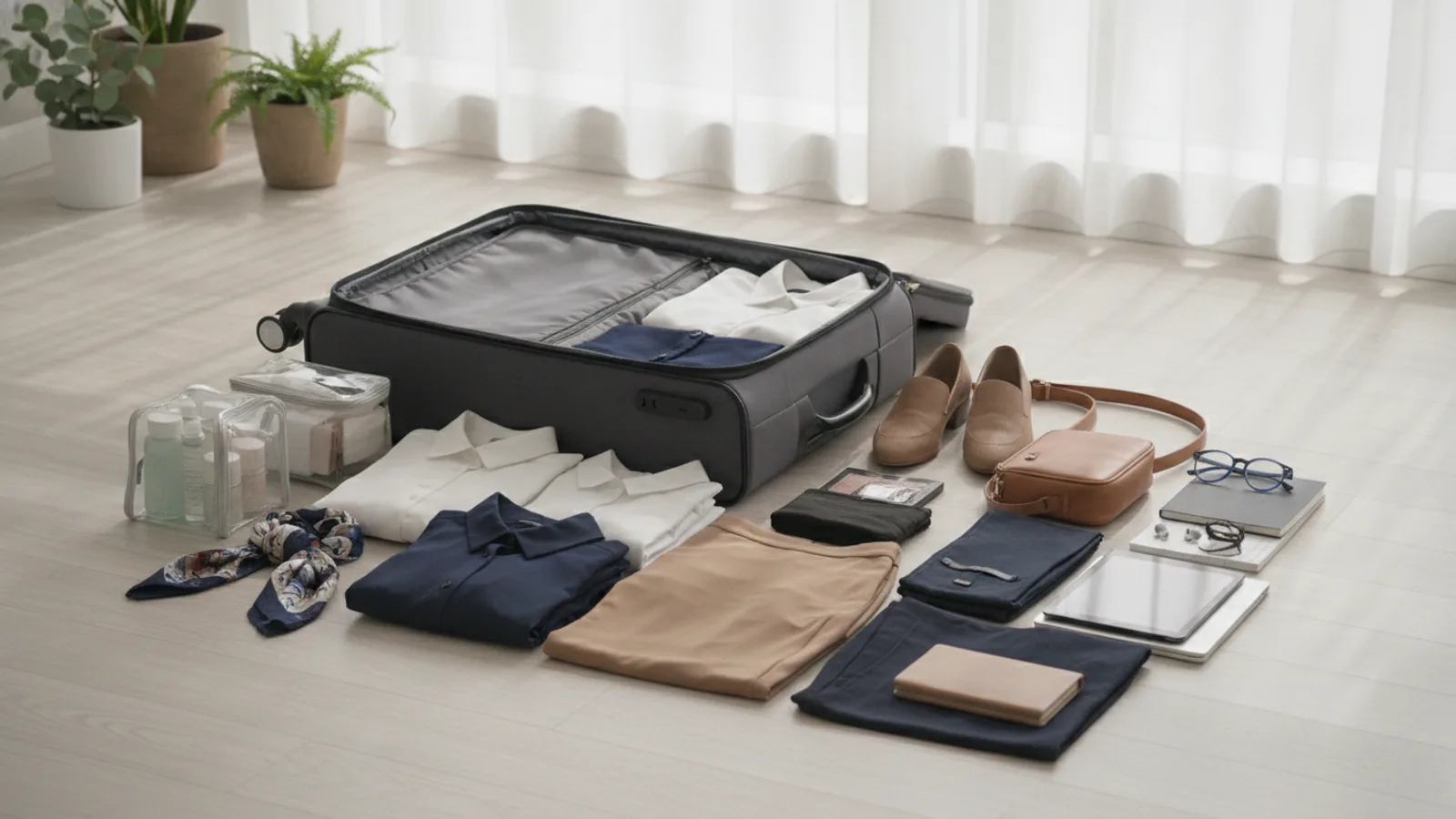
For each planned outfit, lay the bottom piece flat, then place the top on top, followed by any layer. Fold the arms of the top inward and then fold the whole stack into a bundle that fits your bag. Use a simple fold or a roll, whichever keeps wrinkles out better for that fabric. As you finish each bundle, place it directly into your bag in the order you will need it, with the first day's outfit on top. After all bundles are in, press down gently to check that the bag closes without force. This check matters because overstuffing stretches fabric and creates deep creases. Bundling by outfit also means you can lift out one complete set without disturbing the rest, which is a major time saver on a short trip.
Pack shoes and bulky items first
Shoes and other bulky items take up the most space, so place them at the bottom of your bag before adding clothing bundles. Put each shoe in a separate cloth bag or wrap it in a plastic bag to keep dirt away from fabric. If you bring a second pair of shoes, choose one that works for both day and evening to save room. After shoes are in, fill the empty spaces around them with small items like socks, belts, or charging cables. Then add your outfit bundles on top. Checking that shoes are clean and dry before packing is important because moisture and grit can damage nearby clothing. This order also creates a flat base that helps the rest of your packing stay neat and easy to find.
Add small essentials in a separate pouch
Gather small personal items such as a stain remover pen, a sewing kit, extra buttons, and a lint roller into one small pouch. Also include any medications, a phone charger, and a compact umbrella if rain is likely. Place this pouch in an outer pocket or at the top of your bag so you can reach it without unpacking. After packing the pouch, do a quick check that every item is closed tightly and cannot leak. This step matters because a leak from a stain pen or toiletry can ruin an entire outfit, and having these items together saves you from searching through the whole bag. Keeping small essentials separate also makes it easy to move them to a day bag when you leave the hotel for meetings.
Do a final wear and weather check
Before closing your bag, review the trip agenda and weather one last time. Put on the first day's outfit completely, including shoes and any layer, to confirm it feels right. Then check that each remaining outfit has all its parts, such as a belt that matches the trousers or a camisole under a sheer top. Also verify that your bag contains any required travel documents and that your shoes are comfortable for walking. After this check, close the bag and lift it to confirm you can carry it easily. This final review is important because it catches missing pieces and uncomfortable choices while you are still at home. It also gives you confidence that you can handle the trip without last-minute shopping or borrowing.
Quick Reference
| Situation | Action | Why it helps |
|---|---|---|
| Your trip includes a formal dinner after a full day of meetings. | Pack one dark, wrinkle-resistant outfit for the dinner and wear it only for that event. Bring a small bag or clutch that holds your phone and room key so you do not need to carry your work bag. | Separating the formal outfit prevents it from getting crushed during the day and ensures you look appropriate without repacking. |
| The weather forecast changes to colder or wetter than expected. | Add one compact extra layer, such as a thin sweater or a packable rain shell, and swap one pair of shoes for a waterproof option. Roll these items tightly and place them at the top of your bag. | A single added layer and weather-ready shoes keep you comfortable without forcing you to repack your entire bag. |
| You need to attend an evening event right after landing. | Pack a complete change of clothes in your personal item or at the top of your carry-on. Include fresh undergarments, a wrinkle-resistant top, and a small toiletry kit so you can refresh in an airport restroom. | Having a quick-change outfit within reach means you can arrive at the event looking polished even if checked luggage is delayed. |
Common Issues
- You packed too many shoes and now the bag is heavy and hard to close.: Remove one pair and wear your bulkiest shoes on travel day. Choose shoes that match both your neutral bottoms. If you must bring a second pair, make it a flat that can fold or pack flat. Always test that the bag closes without force before you leave home.
- Your clothes arrive wrinkled and you have no time to iron.: Repack using bundles with tissue paper between layers, and unpack immediately when you reach your room. Hang wrinkled items in the bathroom while you take a hot shower to let steam relax the fabric. For future trips, choose fabrics that resist wrinkles and roll rather than fold.
- You forgot a small but important accessory like a belt or charger.: Before closing your bag, lay out every complete outfit and place all accessories on top of the matching clothing. Use a checklist that includes undergarments, socks, belts, and chargers. If you discover a missing item at your destination, buy a simple replacement only if it is truly needed.
Advanced Tips
- Use compression cubes for bulky items like sweaters, but keep delicate fabrics in smooth packing folders to avoid sharp creases.
- Take a photo of your packed bag layout so you can repack quickly and confirm nothing was left behind at the hotel.
- Choose one accent color for ties, scarves, or jewelry to make two outfits look like four without adding extra clothing.
Final Checklist
- Confirm every event on the agenda has one complete outfit with a top, bottom, shoes, and any needed layer.
- Check that all clothing pieces match your chosen neutral palette and that no item only works with one other piece.
- Place small essentials, medications, and chargers in a separate pouch at the top of your bag for easy access.
- Try on the first day's outfit completely and lift your packed bag to confirm you can carry it comfortably.
FAQ
How many outfits should I pack for a three-day business trip?
For a three-day trip, pack three complete outfits plus one extra top. Plan one outfit for travel day, one for each meeting day, and one for any evening event. Reuse bottoms and layers to reduce the total number of pieces. If your trip includes a formal dinner, add one dedicated outfit for that event. Always check your agenda and dress code first, because the correct number depends on the specific events and how much time you will spend in each setting.
What is the best way to prevent wrinkles in packed business clothes?
Fold or roll each outfit as a bundle and place tissue paper between fabric layers. Choose wrinkle-resistant materials when possible, and pack heavier items at the bottom. When you arrive, unpack immediately and hang wrinkled pieces in the bathroom while you take a hot shower. The steam helps relax fibers. For very delicate items, use a smooth packing folder instead of a bundle. Always test your folding method at home before a trip so you know which technique works best for your specific clothing.
How do I handle shoes for both meetings and casual evenings?
Bring one pair of comfortable, closed-toe shoes for meetings and one pair of neat, low-profile shoes for evenings. Choose colors that match your neutral palette so both pairs work with all outfits. Wear the bulkier pair on travel day to save space. If your trip includes a lot of walking, prioritize comfort and check that the shoes are broken in before you leave. Place each pair in a separate cloth bag to protect your clothing. This approach keeps your bag light while covering both professional and casual settings.