How To Layer For Melbourne Weather Without Overpacking
A practical step-by-step guide to how to layer for Melbourne weather without overpacking, including preparation, instructions, common issues, tips, and next steps.

How To Layer For Melbourne Weather Without Overpacking
Melbourne's weather shifts through four seasons in a single day, so the goal is not to pack for every scenario but to build a small set of layers that work together. This guide shows you how to choose a base layer, a mid layer, and a shell that handle cool mornings, warm afternoons, sudden showers, and windy evenings without filling a large suitcase. You will learn what to wear on the plane or train, what to keep in a day bag, and how to check the forecast so you pack only what you will actually use.
Fast Answer
- Pack three thin layers instead of one thick coat: a breathable base, a light warm middle, and a rainproof outer shell you can carry.
- Check the hourly forecast each morning and move one layer from your bag to your body before you leave.
Before You Start
- Read the hourly forecast for the day, not just the daily high and low, because Melbourne can swing from cool to warm within a few hours.
- Choose a small day bag that fits your folded shell and mid layer so you can add or remove clothing without carrying a large suitcase.
- Test your layers together at home by wearing them indoors for ten minutes, then remove one at a time to see how quickly you overheat.
- Lay out your clothes the night before and remove anything you cannot wear in at least two different combinations.
Step-by-Step Instructions
Start with a breathable base layer
Choose a base layer that sits against your skin and moves moisture away from your body. A light long-sleeve top in a smooth synthetic blend or fine merino works well because it adds warmth without bulk and dries quickly if you get caught in a shower. Avoid heavy cotton for the base layer, because once it gets damp from sweat or rain it stays wet and pulls heat from your body. Put on the base layer first, then check that you can move your arms and shoulders freely. If the fabric feels tight or bunches under the arms, size up or choose a different cut. This check matters because a base layer that restricts movement will make you resist wearing it, and you will end up removing the one layer that keeps you comfortable when the temperature drops.
Add a light mid layer for warmth
The mid layer is your main insulation, so pick something thin but warm, such as a light fleece, a thin wool sweater, or a compact insulated jacket. This layer should fit over your base layer without feeling tight and should be easy to remove and tie around your waist or stuff into your bag. Test the mid layer by wearing it over the base layer and raising your arms above your head; if the hem rides up too far or the shoulders pull, try a different size. You want a mid layer that traps warmth but still lets you cool down quickly when you step into a heated tram, train, or shop. This check matters because a mid layer that is hard to remove will stay on too long, making you sweat and then feel cold once you go back outside.
Carry a packable rain shell
A rain shell is your outer defense against wind and sudden showers. Look for a lightweight jacket that blocks wind and rain, has a hood, and folds into its own pocket or a small stuff sack. Put the shell on over your base and mid layers and check that the sleeves cover your wrists and the hem covers your hips when you reach forward. Open and close the main zipper a few times to make sure it runs smoothly, and adjust the hood so it stays up without holding it. This check matters because a shell that is too short or too tight will let rain run onto your clothes, and one that is hard to pack will stay in your suitcase instead of your day bag. Keep the shell accessible at the top of your bag, not buried at the bottom.
Build a small mix-and-match outfit
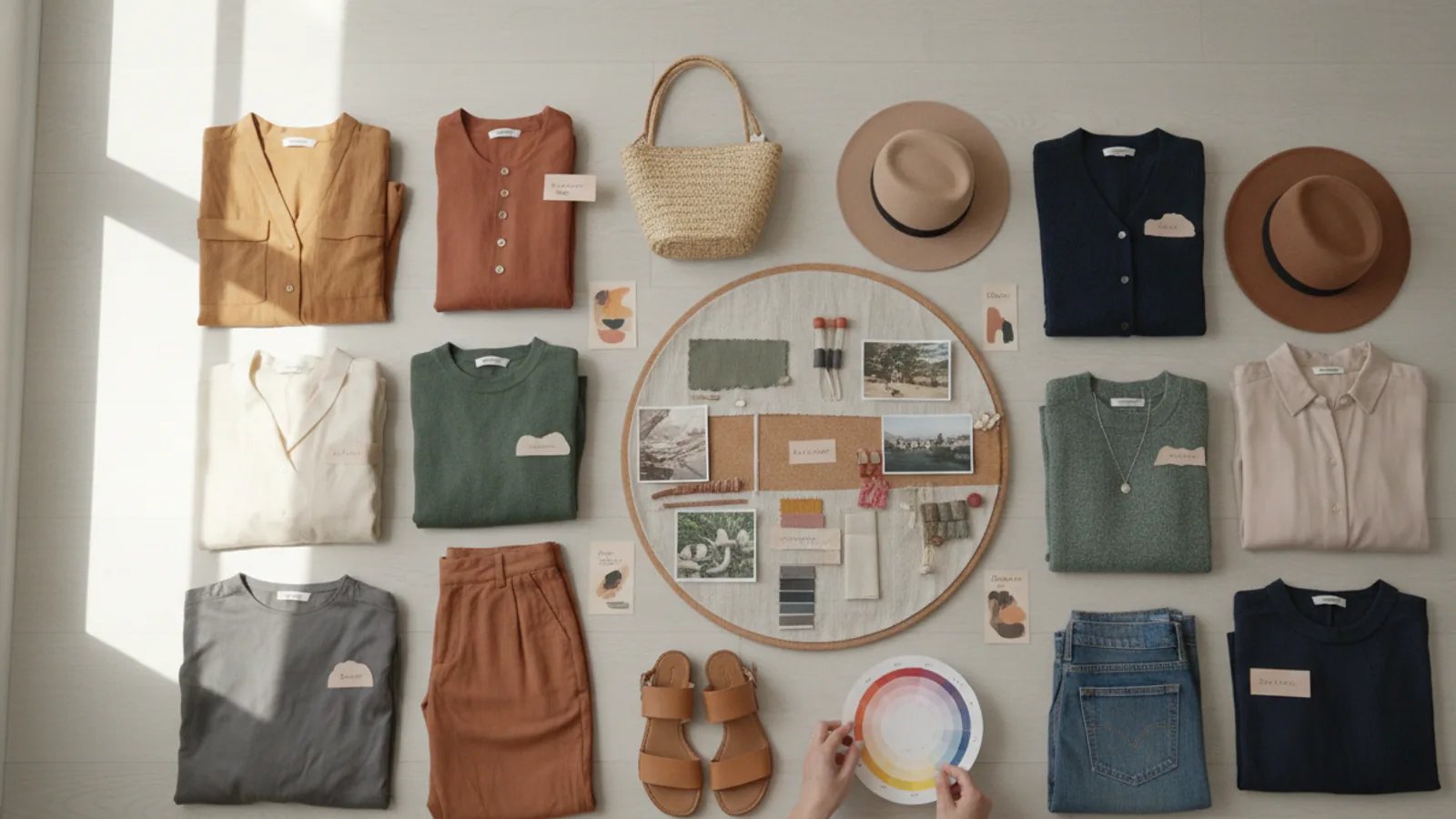
Limit your clothing to pieces that work in at least two combinations. For example, one pair of dark trousers and one pair of jeans can pair with two base layers and two mid layers to create several outfits. Choose colors that all match so you never have to think about what goes together in the morning. Lay the items on a bed and count how many complete outfits you can make without repeating the same exact combination. If you cannot make at least three different outfits from your layers, remove something and replace it with a piece that adds more options. This check matters because a small set of flexible layers takes less space and gives you more choices than a large set of single-purpose clothes. Roll soft items to save space and reduce wrinkles.
Plan for morning and evening temperature drops
Melbourne mornings and evenings are often much cooler than the middle of the day, so plan to start with more layers and remove them as it warms up. Before you leave, put on your base layer, mid layer, and shell, then step outside for two minutes. If you feel cold, add a scarf or a thin hat; if you feel warm, remove the mid layer and carry it. Keep a small scarf and a thin beanie in your bag even on mild days, because they add warmth without much weight. This check matters because your body heat changes when you move from a warm indoor space to a cool street, and testing outside gives you a real reading instead of a guess. Adjust before you get too hot or too cold, not after.
Use a day bag as your layer control center
Your day bag should hold the layers you are not wearing, plus a small pouch for keys, phone, and transport card. Pack the shell at the top, the mid layer in the middle, and the base layer at the bottom only if you carry a spare. Add a folded scarf and a thin beanie in a side pocket. Before you leave, open the bag and check that you can reach the shell without unpacking everything else. This check matters because you will add and remove layers several times a day, and a bag that is hard to open or search will make you leave layers behind at home. Keep the bag light enough to carry for an hour without shoulder pain. If it feels heavy, remove one item you have not used in the last two days.
Quick Reference
| Situation | Action | Why it helps |
|---|---|---|
| Cool morning that will warm up by lunchtime | Wear your base layer and mid layer, carry the shell in your day bag, and remove the mid layer once you feel warm. | You stay comfortable in the cool air without sweating later, and you avoid carrying a heavy coat when the sun comes out. |
| Windy day with fast-moving showers | Put on the shell over your base and mid layers, pull up the hood, and keep your hands free by using a crossbody bag. | The shell blocks wind and rain while your base and mid layers keep you warm, and a crossbody bag stays secure when you move quickly. |
| Evening event after a warm afternoon | Carry your mid layer and scarf in your day bag, then add them when the sun goes down and the temperature drops. | You avoid carrying a bulky coat all afternoon while still having warmth ready for the cooler evening. |
Common Issues
- You packed too many thick layers and your bag feels heavy.: Remove one mid layer and replace it with a thinner option that still adds warmth. Keep only layers you can wear together or separately, and put the heaviest item on your body instead of in your bag.
- You sweat during the day and then feel cold in the evening.: Choose a breathable base layer that moves moisture away from your skin, and remove your mid layer before you start to sweat. Carry a dry base layer in your day bag so you can change if your first one gets damp.
- You forgot your shell and got caught in a shower.: Step into a shop, cafe, or station entrance until the rain eases, and use a small towel or napkin to dry your hair and shoulders. Next time, keep your shell at the top of your day bag so you can reach it in seconds.
Advanced Tips
- Wear your heaviest layer on travel days so it does not take up space in your bag, and keep a thin spare layer in your carry-on for temperature changes.
- Choose socks and shoes that dry quickly, because wet feet make you feel cold even when your upper body is well layered.
- Use a light scarf as a flexible layer for your neck, head, or shoulders, and store it in your day bag rather than tying it around your waist.
- Check the hourly forecast for wind as well as rain, because wind can make a mild day feel much colder and change which layer you need.
Final Checklist
- Base layer that fits closely and moves moisture away from your skin.
- Mid layer that is thin, warm, and easy to remove and carry.
- Packable rain shell with a hood, stored at the top of your day bag.
- Small scarf, thin beanie, and a dry pouch for your phone and wallet.
FAQ
How many layers should I wear in Melbourne?
Aim for three thin layers: a base layer, a mid layer, and a packable shell. You can wear all three in the cool morning, remove the mid layer in the warm afternoon, and add the shell when rain or wind arrives. Three layers give you more control than one thick coat and take up less space in your bag.
What should I keep in my day bag for changing weather?
Keep your rain shell, a thin mid layer, a small scarf, and a thin beanie in your day bag, plus a dry pouch for your phone and wallet. Put the shell at the top so you can reach it without unpacking. Check your bag each morning and remove anything you have not used in the last two days to keep it light.
How do I avoid overpacking for a short trip?
Choose a small set of layers that all match and can be worn in at least three combinations. Pack two base layers, one mid layer, one shell, one scarf, and one beanie, then wear your heaviest items on travel days. Lay everything out before you pack and remove any item that only works with one other piece.