How To Research Australian Labels Making Good Knitwear
A practical step-by-step guide to how to research Australian labels making good knitwear, including preparation, instructions, common issues, tips, and next steps.
How To Research Australian Labels Making Good Knitwear
Researching Australian labels that make good knitwear requires a patient, methodical approach that focuses on materials, construction, and transparency rather than hype. This guide walks you through preparation, step-by-step evaluation, and practical checks so you can identify quality knitwear from small and large Australian producers. You will learn how to assess fibres, stitches, finishes, and supply-chain information, and how to compare labels fairly. By the end, you will have a repeatable research routine that helps you make informed choices and avoid common pitfalls, such as confusing softness with durability or overlooking after-sales support.
Fast Answer
- Focus first on the fibre content and the knit structure, because these two factors most directly affect warmth, shape retention, and pilling resistance.
- Look for labels that disclose where the yarn is spun and where the garment is made, since transparency often signals better quality control.
Before You Start
- Create a simple spreadsheet or notebook with columns for label name, fibre content, knit type, care instructions, and where you found the information.
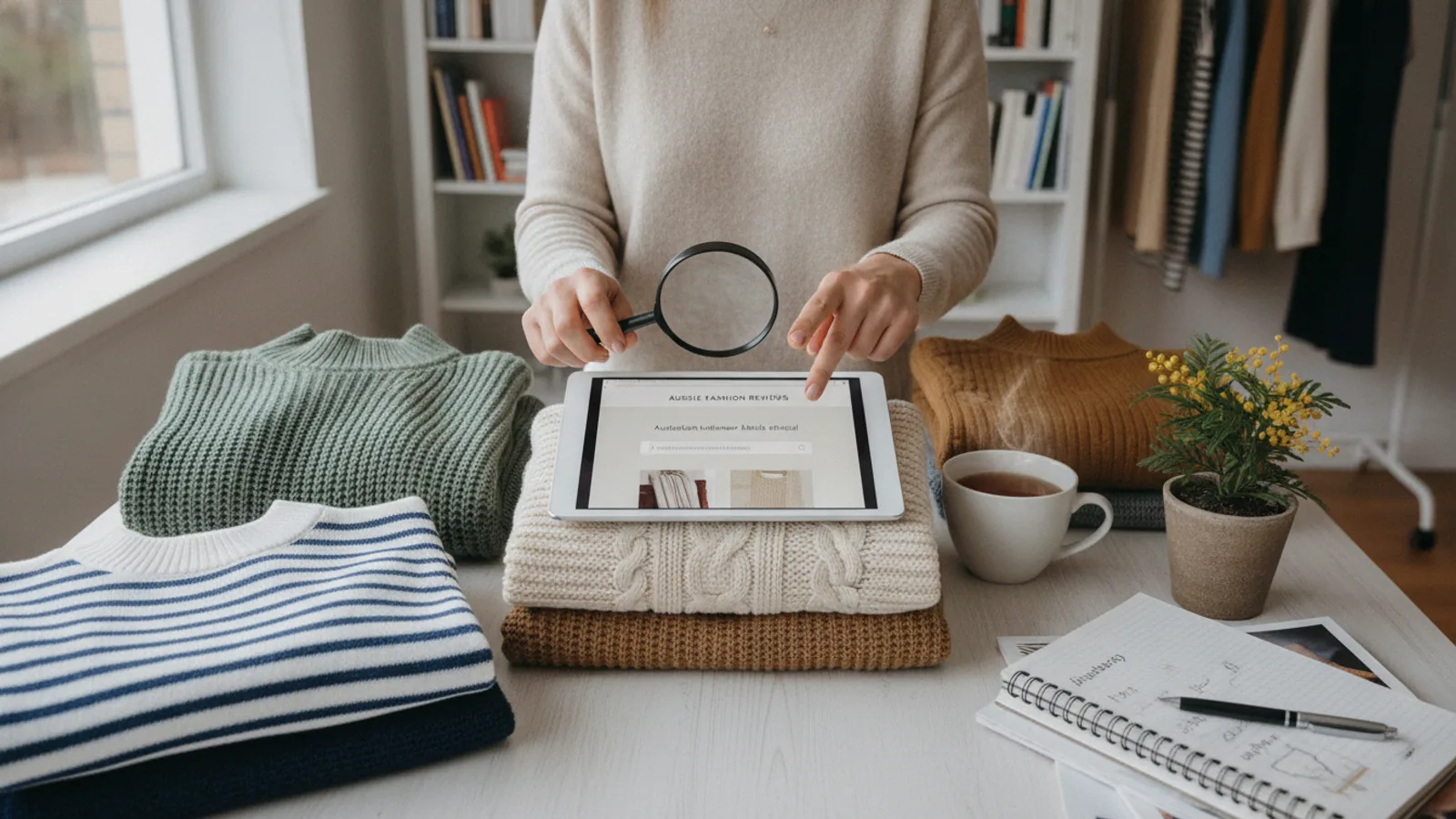
- Gather a small magnifying glass, a soft measuring tape, and a lint roller so you can inspect stitches and assess surface fuzz during in-person visits.
- List your personal priorities, such as warmth, breathability, ease of care, or durability, to help you compare labels against your actual needs.
- Set aside time to read at least three independent reviews or interviews per label, because single sources can be biased or outdated.
Step-by-Step Instructions
Map the label landscape
Start by building a broad list of Australian knitwear labels rather than focusing on one or two names. Search online for directories of local makers, craft fairs, and design markets, and note any label that appears repeatedly in independent articles or forums. For each candidate, record whether they sell directly to the public or through stockists, because this affects how much information you can gather. A practical check is to see if the label has a physical address or a registered business number listed on its own website, as this helps confirm it is a real operation. Taking this step first matters because it prevents you from spending hours on labels that are inactive or hard to contact, and it gives you a fair basis for comparison later.
Inspect fibre and yarn details
Once you have a shortlist, examine the fibre content for each label's knitwear. Look for specific percentages, such as '100% merino wool' or '70% wool, 30% silk', rather than general terms. Then dig into the yarn's origin: some labels name the spinning mill or region, which can indicate consistent quality. A practical check is to compare the stated fibre against the care label; if a garment claims to be pure wool but recommends machine washing in hot water, that is a contradiction worth investigating. This matters because fibre type determines warmth, breathability, and how the garment will age, and precise information shows the label understands its own supply chain.
Evaluate knit structure and gauge
Knit structure influences stretch, shape retention, and warmth. Ask whether the knitwear is flat-bed knitted, circular knitted, or hand-framed, and whether it uses single jersey, rib, or interlock. A practical check is to gently stretch a small area and watch how quickly it returns to shape; slow recovery suggests the garment may sag over time. Also look at the gauge, which is the number of stitches per inch or centimetre; a tighter gauge generally gives a denser, more durable fabric. This step matters because two garments with identical fibre content can perform very differently based on how they are knitted, so you cannot judge quality by fibre alone.
Check seams, trims, and finishing
Good knitwear often shows quality in its finishing. Inspect seams for flat-lock or linked construction, which reduces bulk and irritation, and check that buttons, zips, or toggles are securely attached and appropriate for the garment's weight. A practical check is to run your finger along the inside of a seam to feel for roughness or excess fabric; poor finishing can cause discomfort and early wear. Also look at hems and cuffs: ribbed edges should be elastic and neatly joined. This check matters because even excellent yarn can be ruined by weak seams or cheap trims, and these details often reveal how much care the maker puts into the final product.
Assess transparency and ethics claims
Many Australian labels make claims about ethical production or local manufacturing. Treat these as starting points, not proof. Look for specific information such as the name of the factory, the region where the yarn is spun, or certifications that can be independently checked. A practical check is to see whether the label's claims are consistent across its website, social media, and third-party interviews; contradictions are a warning sign. This step matters because transparency helps you understand working conditions and environmental impact, and vague or shifting claims make it harder to trust the rest of the label's quality messaging.
Test with real-world use and care
Before committing to a full-price purchase, try to assess how the knitwear performs in real conditions. If buying in person, wear the garment for at least ten minutes to check for itchiness, tightness, or slipping. If buying online, review the care instructions and consider whether you are willing to follow them, such as hand washing or drying flat. A practical check is to look for customer reviews that mention pilling, stretching, or colour fading after several wears. This matters because knitwear changes with use, and a garment that feels good in the shop may not hold up after a few washes if the fibre or knit is unsuitable for your routine.
Quick Reference
| Situation | Action | Why it helps |
|---|---|---|
| You find a label with beautiful photos but no fibre percentages listed. | Contact the label directly and ask for the exact fibre content and yarn origin, and request a care label photo before buying. | Without specific fibre details, you cannot judge warmth, durability, or how the garment will behave after washing, so asking is the only way to fill that gap. |
| You are comparing two similar jumpers at different prices and want to know which is better made. | Turn both garments inside out and compare seam types, stitch consistency, and the tightness of the knit; also check the weight of each piece in your hands. | Internal finishing and knit density often reveal quality differences that are invisible from the outside, helping you judge value beyond the price tag. |
| A label claims its knitwear is made in Australia but gives no further detail. | Look for the name of the factory or workshop on the label's website, and search for independent interviews or news articles that mention its production. | A specific production location can be verified, while a vague claim cannot, so this check helps you decide how much weight to give the label's other statements. |
Common Issues
- The knitwear pills heavily after a few wears, even though it felt soft in the shop.: Check the fibre length and twist in the yarn description; shorter fibres and low twist tend to pill more. Contact the label to ask about their yarn's fibre length and consider choosing a tighter, higher-twist knit next time.
- The garment loses its shape and stretches out at the elbows or cuffs.: Look for ribbed cuffs and hems with good recovery, and avoid overly loose knits for areas that need support. When washing, follow the care label precisely and dry flat to help maintain the original shape.
- You cannot find any information about where the wool comes from or how the garment is made.: Ask the label directly through email or a contact form, and check independent maker directories or craft communities for mentions. If the label cannot or will not provide basic supply-chain details, treat that as a sign to look at other options.
Advanced Tips
- Learn to read yarn labels for terms like 'worsted' or 'woollen', as these describe how the fibre is prepared and spun, which affects smoothness and warmth.
- Compare the weight of a garment in grams per square metre if the label provides it, because a denser knit usually offers better durability and wind resistance.
- Follow Australian knitwear designers and makers on professional networks to see how they discuss their materials; these conversations often reveal more than marketing pages.
Final Checklist
- Confirm the exact fibre content and yarn origin for each shortlisted label, ideally from the label itself or a care label photo.
- Inspect seams, trims, and hems inside and out, checking for flat-lock or linked construction and secure attachments.
- Read at least three independent reviews or interviews per label, noting any repeated complaints about pilling, stretching, or customer service.
- Verify the return policy and care instructions in your own account or on the label's documentation before making a purchase.
FAQ
How can I tell if a wool knit is good quality without touching it?
Look for specific fibre percentages, a named yarn origin, and a tight, even knit described in the product details. Check whether the label provides care instructions that match the fibre, and read independent reviews for mentions of pilling or shape loss. If the information is vague, ask the label directly before buying.
Are Australian-made knitwear labels always higher quality?
Not automatically. Local manufacturing can allow closer oversight, but quality still depends on the fibre, knit structure, and finishing. Evaluate each label on its own merits by checking fibre details, construction, and transparency rather than assuming origin guarantees excellence.
What should I check first if I want knitwear that lasts several seasons?
Start with the fibre content and knit density. Natural fibres with longer staple lengths and a tighter gauge tend to hold shape better. Then examine seams and trims, and read the care label to ensure you can realistically maintain the garment according to the maker's instructions.