How To Plan A Polished Outfit For A Job Interview
A practical step-by-step guide to how to plan a polished outfit for a job interview, including preparation, instructions, common issues, tips, and next steps.
How To Plan A Polished Outfit For A Job Interview
This guide helps you plan a polished interview outfit by matching your clothes to the role, the company culture, and the weather, while keeping comfort and fit in focus. You will learn how to research the workplace, test your outfit ahead of time, handle small emergencies, and walk in feeling calm and prepared so your answers, not your clothes, take center stage.
Fast Answer
- Choose one clean, well-fitting outfit that matches the company's daily dress code and test it on your feet at least two days before the interview.
- Pack a small repair kit and arrive early enough to check your reflection so you can fix small issues before you meet anyone.
Before You Start
- Research the company's dress culture by checking its website, recent social posts, and any public photos of employees to guess the daily dress code.
- Check the weather forecast for your interview day so you can pick layers, shoes, and outerwear that keep you comfortable during travel and waiting time.
- Try on your full outfit, including shoes and underlayers, at least two days before so you have time to fix fit problems or clean anything.
- Prepare a small kit with a lint roller, stain wipe, spare button, and breath mint, then leave it by the door the night before.
Step-by-Step Instructions
Match the outfit to the workplace culture
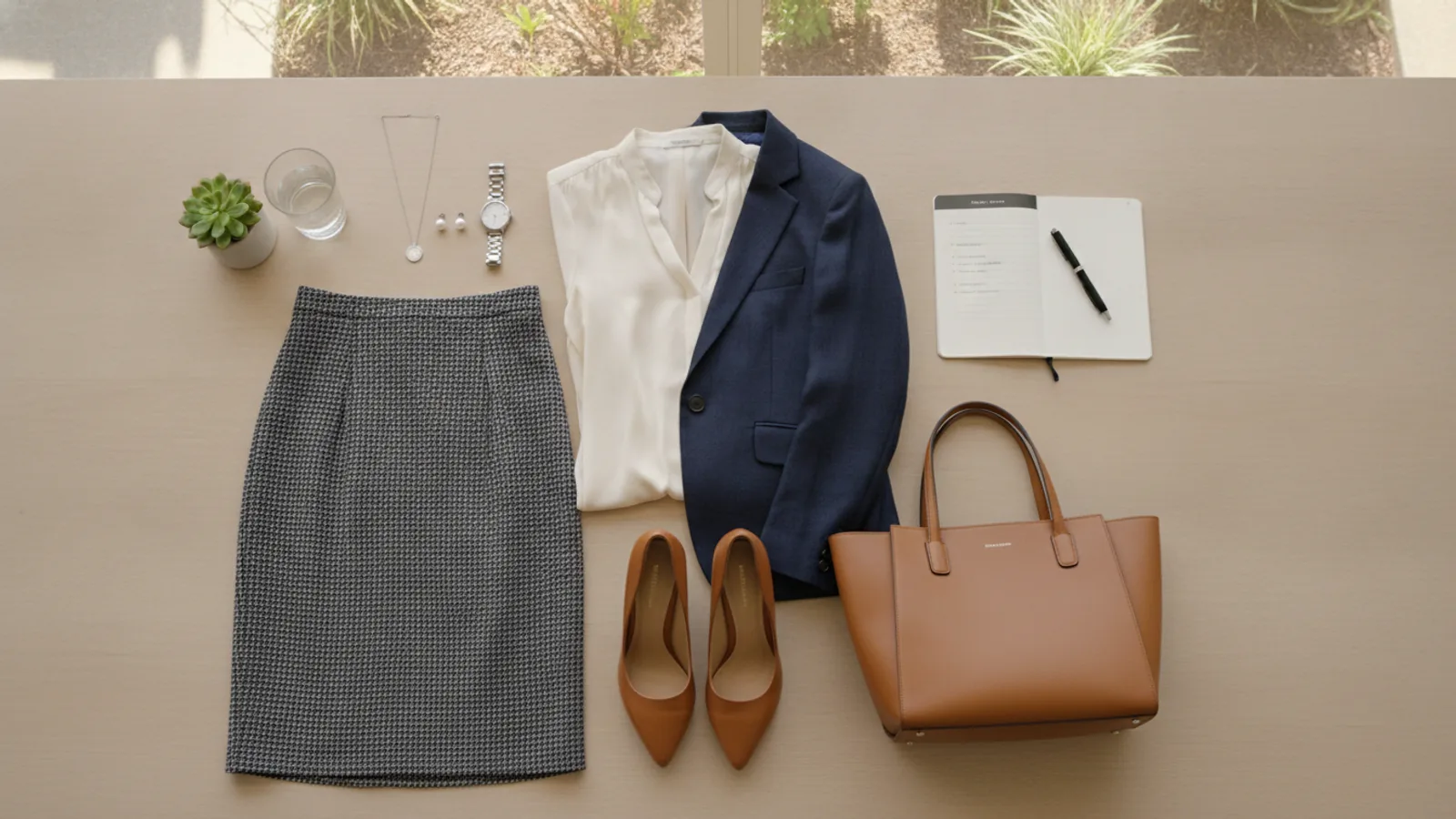
Start by learning what people normally wear at the company. Look at the careers page, recent team photos, and public posts from current employees. If the workplace is formal, plan a suit or a structured jacket with pressed trousers or a skirt. If it is business casual, choose a collared shirt, a simple blouse, or a neat knit with dark jeans or chinos. If you cannot find clear clues, aim one level above the daily dress code, because slightly overdressed is safer than too casual. Write your choice down and compare it with the role you applied for. For example, a client-facing job may expect a sharper look than a back-office role. As a practical check, ask yourself whether a current employee would feel comfortable introducing you to a manager in that outfit. That check matters because visible effort shows respect for the workplace and helps you feel that you belong there.
Choose a clean, well-fitting core outfit
Once you know the dress level, pick the main pieces: a top, a bottom, and a layer such as a jacket or cardigan. Fit matters more than fashion. The shoulders of a jacket should sit at your natural shoulder line, sleeves should end near your wrist bone, and trousers or a skirt should let you sit, stand, and walk without pulling. Check for wrinkles, missing buttons, loose threads, and faint stains under bright light. If something needs repair, fix it now or choose another piece. Make sure the colors work together and that your underlayers do not show through. A simple test is to sit in a chair, cross your legs if you normally do, and raise your arms as if you were shaking hands. That check matters because an outfit that looks fine while standing may feel tight or revealing when you move, and discomfort can distract you during the interview.
Test shoes, socks, and small details
Shoes often decide whether an outfit feels polished, so choose a clean pair that you can walk in comfortably. If they are new, wear them indoors for a short time before the interview to soften them and spot any rubbing. Match your socks or tights to your trousers or skirt so the line stays smooth when you sit. Check that your belt matches your shoes in tone and that no metal bits jingle when you move. For bags, pick one that holds a folder, a pen, and your phone without looking bulky. A practical check is to walk up and down a hallway, turn quickly, and climb a few stairs. That matters because interview days often include walking from a lobby to an office, and sore feet or noisy shoes can pull your focus away from the conversation.
Do a full dress rehearsal with timing
Two or three days before the interview, put on the complete outfit, including shoes and any accessories you plan to wear. Stand in front of a full-length mirror and look from all sides. Sit down, stand up, reach forward, and check that nothing gaps or rides up. Time how long it takes to get dressed, groom, and travel to your destination. Add extra minutes for traffic, parking, or finding the right entrance. If the rehearsal shows a problem, you still have time to swap a piece, visit a tailor, or clean a mark. A practical check is to take a photo of yourself in the outfit and look at it later with fresh eyes. That matters because a camera shows fit and balance differently from a mirror, and a small flaw you notice now is much easier to fix than one you discover in the waiting room.
Prepare a small repair and comfort kit
Pack a small pouch with a lint roller, a stain wipe, a spare button, a safety pin, and a breath mint. Add a compact mirror only if you will use it calmly. Keep the kit in your bag so you can handle a smudge, a loose thread, or a missing button without searching for help. Before you leave, run the lint roller over your shoulders and lap, and check your teeth and nose in a mirror. For long travel, carry a small umbrella or a light layer that matches your outfit. A practical check is to open the kit and confirm every item is there and works. That matters because small problems feel large when you are already nervous, and having a simple fix within reach helps you stay calm and focused on your answers instead of your appearance.
Do a final check before you walk in
On the interview day, get dressed with time to spare. Use a full-length mirror or a quiet reflection to check your collar, buttons, zipper, hem, and shoes. Smooth your hair, adjust your layer, and take a slow breath. If you are early, step into a restroom to do a last look and use your repair kit if needed. Turn off or silence your phone so it does not buzz during the meeting. As a practical check, ask yourself whether you can move, sit, and speak comfortably for the length of the interview. That matters because the last look is not about vanity; it is about removing small worries so your attention stays on the people in the room and the answers you prepared. When you feel put together, you speak with more ease.
Quick Reference
| Situation | Action | Why it helps |
|---|---|---|
| You cannot tell how formal the workplace is from its website. | Choose a middle path: dark trousers or a simple skirt with a button-down shirt or a fine knit, and add a structured jacket that you can remove if the room feels casual. | A removable layer lets you adjust quickly without changing your whole outfit, and a middle path shows respect without looking out of place in a relaxed office. |
| Your interview is on a very hot or very cold day. | Plan thin layers that you can add or remove, choose shoes that handle the weather, and carry a small umbrella or a light scarf that matches your outfit. | Comfortable layers keep your body temperature steady during travel and waiting, so you can focus on the conversation instead of shivering or sweating. |
| You notice a small stain or a loose button minutes before the interview. | Use a stain wipe or a safety pin from your kit, and if the fix is not clean, adjust your layer to cover the spot or remove the piece if it is an outer layer. | A quick, calm fix prevents a tiny flaw from becoming a large distraction, and covering or removing the piece keeps your overall look tidy. |
Common Issues
- The outfit fits well when you stand but feels tight when you sit.: Test the outfit by sitting in a chair for several minutes and crossing your legs if you normally do. If the waistband or shoulders pull, choose a different size, a stretchier fabric, or a higher rise so you can sit comfortably through the whole interview.
- Your shoes look good but hurt after a short walk.: Break in new shoes indoors before the interview, and carry a small pad or a spare pair of low-profile socks. If the pain continues, choose a different pair that you can walk in for at least fifteen minutes without rubbing or slipping.
- You feel overdressed or underdressed compared with the people you see.: Keep a removable layer, such as a jacket or cardigan, so you can quickly match the room. If you are underdressed, a simple scarf, a clean folder, and calm posture can add polish without a full change of clothes.
Advanced Tips
- Choose fabrics that resist wrinkles during travel, such as wool blends or sturdy cotton, and pack a light steamer or hang the outfit in a steamy bathroom before you dress.
- Use a single focal point, like a neat collar, a simple watch, or a calm tie, and keep everything else quiet so the interviewer's eye rests on your face.
- Take a photo of your final outfit in daylight a day ahead, then look at it again in the morning to catch anything the indoor mirror missed.
Final Checklist
- Outfit matches the workplace dress code and feels comfortable when you sit, stand, and walk.
- All pieces are clean, pressed, and free of loose threads, missing buttons, or visible stains.
- Shoes are broken in, quiet on the floor, and paired with matching socks or tights.
- Repair kit, folder, pen, and breath mint are packed and placed by the door the night before.
FAQ
How far ahead should I plan my interview outfit?
Start at least two or three days before the interview. That gives you time to research the workplace, try on every piece, fix fit or cleaning problems, and break in your shoes. A short rehearsal also helps you time your morning routine so you are not rushing on the day.
What if I have no formal clothes and cannot buy new ones?
Focus on clean, well-fitting basics you already own, such as dark trousers or a simple skirt with a pressed shirt or blouse. A calm, neat look matters more than a formal label. Borrow a jacket or cardigan if you can, and keep accessories simple and tidy.
Should I wear perfume or cologne to an interview?
Keep scent very light or skip it, because strong smells can bother people in small rooms or trigger allergies. A clean, fresh-smelling outfit and good personal hygiene are enough. If you do wear something, choose a mild product and apply only a small amount well before you arrive.