How To Choose Tights For An Australian Winter
A practical step-by-step guide to how to choose tights for an Australian winter, including preparation, instructions, common issues, tips, and next steps.
How To Choose Tights For An Australian Winter
Choosing tights for an Australian winter means matching fabric weight, opacity, and fit to a climate that swings from cold southern mornings to mild northern days. The right pair layers comfortably under skirts and trousers, resists snags, and stays put without digging in, so you stay warm without overheating indoors or outdoors.
Fast Answer
- Start with the coldest morning temperature you expect, then pick a denier and fabric that match that chill rather than the warmest number on the shelf.
- Take your measurements and read the size chart, because a poor fit causes sagging, rolling, and cold spots faster than thin fabric.
Before You Start
- Write down the lowest morning temperature and the highest daytime temperature you expect in your area for the season.
- Measure your waist, hips, and height with a soft tape, then note your usual clothing size for comparison.
- Check the tights label for fabric content, denier, waistband style, and care instructions before buying.
- Wash and dry any tights you already own so you know which pairs still fit well and which have lost shape.
Step-by-Step Instructions
Match denier to your coldest morning
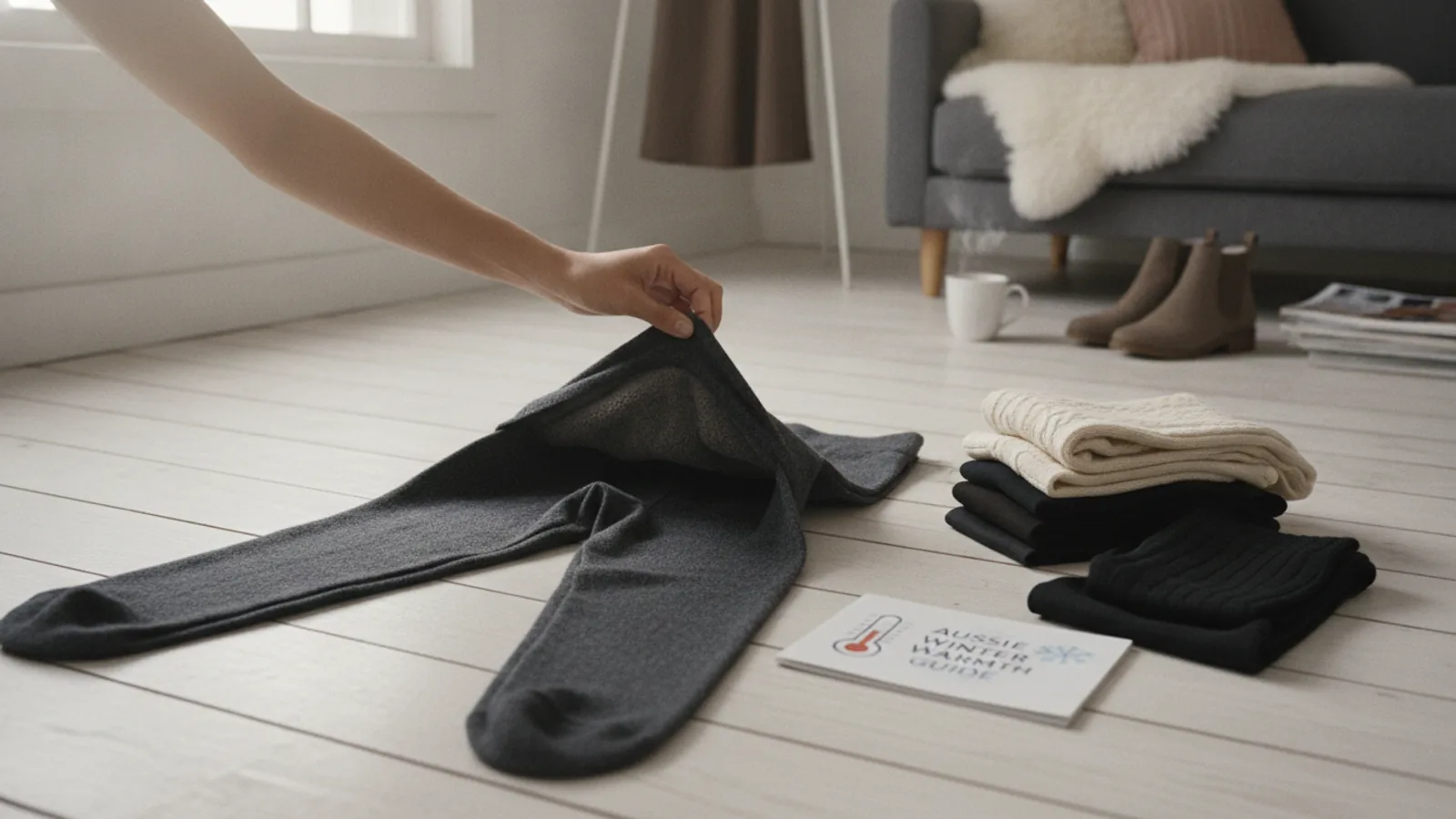
Denier measures the thickness of the yarn, and it gives you a rough starting point for warmth. For mild winter days, a medium denier often feels enough under a skirt. For cold southern mornings, choose a higher denier or a fabric blend that traps air. Read the label rather than guessing from the look of the packet, because two pairs with the same denier can feel different depending on the knit. Hold the tights up to a light: if you can clearly see your hand through the fabric, they are likely a lighter weight. Check this before you leave the shop or before you remove tags at home, so you can compare pairs side by side and choose the one that suits your usual winter routine.
Choose the right fibre blend
Fibre content decides how warm, stretchy, and durable the tights feel. Synthetic blends often hold shape and dry quickly, while natural fibres can feel softer but may lose shape faster. A small amount of stretch fibre helps the tights return to their original size after wearing. Look for a blend that suits your day: a denser knit for standing at a cold bus stop, and a lighter, smoother knit for office wear under a lined skirt. Touch the fabric and stretch it gently across your palm. If it springs back quickly, it is more likely to keep its shape. Check the care label too, because a blend that needs delicate washing may not survive a busy winter week of repeated wear and laundry.
Get the size and fit right
Fit matters more than any single number on the packet. Tights that are too small pull at the waist, roll down, and create cold gaps at the knee. Tights that are too large bunch at the ankle and sag at the crotch. Use your waist, hip, and height measurements, then follow the brand's size chart rather than your usual dress size, because sizing varies between makers. Put the tights on and squat, walk, and climb a few stairs. Check that the waistband stays flat and the gusset sits comfortably. If the fabric pulls tight across the hips or leaves loose folds at the ankle, try a different size. This simple movement test shows how the tights behave in real use, not just how they look while standing still.
Check the waistband and toe seams
Details such as the waistband and toe seams decide whether a pair feels comfortable for hours. A wide, flat waistband usually sits better under clothing and resists rolling, while a narrow band can dig in after a long day. Look at the toe area: a reinforced toe lasts longer if you wear closed shoes, while a seamless toe feels smoother in open shoes. Run your finger along the seams to feel for rough ridges that might rub. Turn the tights inside out and check for loose threads or uneven knitting. These small checks take a minute and reveal quality issues that affect comfort, warmth, and how long the tights last through a winter of regular washing and wearing.
Test warmth with a layering plan
Plan how the tights fit into your outfit before you rely on them for a cold day. Tights alone may not be enough in a sharp wind, so consider a second layer such as a liner tight, a longer skirt, or boots that cover the calf. Put on your full outfit at home and step outside for a few minutes. Check your knees, lower back, and feet, since those areas cool first. If you feel cold at the knee or lower back, add a layer or choose a denser knit. If you feel overheated indoors, a lighter pair under trousers may work better. Testing the whole outfit once prevents a miserable commute and helps you build a small rotation of tights that genuinely suit your winter.
Care for tights so they last the season
Good care keeps tights warm and intact through many wears. Wash them inside a mesh bag or by hand in cool water, then squeeze gently instead of wringing. Hang them to dry away from direct heat, because heat can damage stretch fibres and cause sagging. Store pairs folded in a drawer rather than stretched over a hanger. Before each wear, check for small pulls and catch them early with a tiny drop of clear nail polish at the edge of the run to stop it spreading. Rotate several pairs instead of wearing the same one daily, which gives the fabric time to recover its shape. This routine is simple, cheap, and extends the useful life of every pair you own.
Quick Reference
| Situation | Action | Why it helps |
|---|---|---|
| Cold southern morning with frost and wind before you leave home | Wear a denser knit tight with a wide flat waistband, add a liner layer if needed, and test your full outfit outside for a few minutes. | Wind and frost cool the knees and lower back first, so testing the complete outfit shows whether one layer is actually enough before you commit to a long commute. |
| Mild winter day with a warm afternoon forecast | Choose a lighter denier or a smooth blend, then carry a spare denser pair in your bag in case the temperature drops earlier than expected. | Australian winter days can warm quickly, and a lighter pair prevents overheating indoors while a spare pair covers an unexpected cold snap later in the day. |
| Indoor office or heated workplace for most of the day | Pick a smooth, lower-denier tight that sits flat under clothing, and keep a denser pair for the trip to and from work. | Heated rooms make heavy tights uncomfortable, so separating your commute layer from your indoor layer keeps you warm outside and comfortable at your desk. |
Common Issues
- Waistband rolls down or digs into the waist during the day: Try a higher-rise style with a wide flat band, confirm your hip measurement against the size chart, and avoid tights that feel tight across the hips when you squat. A better fit usually stops the rolling without any tugging.
- Tights ladder or snag soon after purchase: Check for rough nails, rings, and watch straps before dressing, wash tights in a mesh bag, and seal any small pull immediately with a tiny drop of clear nail polish. Handling them gently and rotating pairs reduces repeat damage.
- Toes feel cold or the fabric bunches at the ankle: Choose a size that matches your height so the leg length is correct, look for a reinforced or seamless toe, and smooth the fabric from toe to waist when dressing. Bunched fabric leaves cold gaps and rubs inside shoes.
Advanced Tips
- Layering a thin liner tight under a denser pair adds warmth without much bulk, and you can remove the outer pair indoors if you overheat.
- Colour and finish affect how formal tights look, so keep one plain matte pair for work and one textured or patterned pair for casual winter outfits.
- Rotate at least three pairs through the week and let each rest a day between wears, which helps the stretch fibres recover and keeps the fit consistent.
Final Checklist
- Confirm the tights match your coldest expected morning temperature, not just the warmest option on the shelf.
- Check waist, hip, and height measurements against the size chart before buying or removing tags.
- Inspect the waistband, toe seams, and fabric stretch by hand, then squat and walk in the tights.
- Plan your full winter outfit and test it outdoors briefly, then store and wash the tights with care.
FAQ
How do I know which denier to choose for winter?
Use your coldest expected morning as the guide. A lighter denier suits mild days, while a denser knit or a layered liner helps on frosty mornings. Read the fabric content as well as the denier, because the fibre blend and knit density change how warm the tights feel. If you are unsure, buy one lighter and one denser pair and compare them during a short outdoor test.
Are natural fibres warmer than synthetic ones?
Not automatically. Warmth comes from trapped air, knit density, and fibre blend, so a well-made synthetic blend can feel warmer than a thin natural-fibre pair. Natural fibres may feel softer, while synthetic blends often hold shape and dry faster. Check the label and stretch the fabric gently to see how it behaves, then choose based on your routine rather than a single material claim.
What should I do if my tights keep rolling down?
Rolling usually signals a fit problem rather than a fabric fault. Recheck your hip and waist measurements against the size chart, try a higher-rise style with a wide flat waistband, and test the fit by squatting and walking before wearing them for a full day. If the band still rolls, a different cut or size is the practical fix.